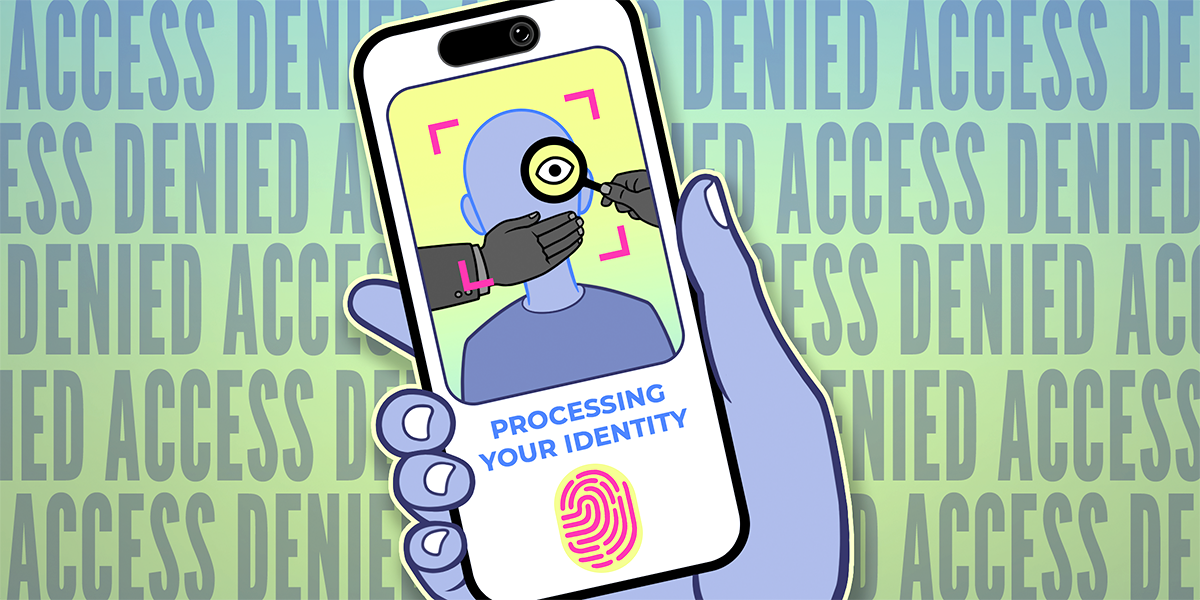
"One of the most common refrains we hear from age verification proponents is that online ID checks are nothing new. After all, you show your ID at bars and liquor stores all the time, right? And it's true that many places age-restrict access in-person to various goods and services, such as tobacco, alcohol, firearms, lottery tickets, and even tattoos and body piercings."
"But this comparison falls apart under scrutiny. There are fundamental differences between flashing your ID to a bartender and uploading government documents or biometric data to websites and third-party verification companies. Online age-gating is more invasive, affects far more people, and poses serious risks to privacy, security, and free speech that simply don't exist when you buy a six-pack at the corner store."
Online age verification requires users to disclose government documents or biometric data to websites and third-party verification companies, increasing invasiveness and risk. Internet-scale regulations sweep across general-purpose platforms, social media, and app stores and therefore affect vastly more adults and youth than in-person checks. Physical age restrictions typically apply only to specific transactions for narrow products or services, while online mandates can gate lawful speech, information, and services more broadly. These differences create heightened privacy, security, and free-speech harms and impose widespread burdens on users who must surrender sensitive personal data to gain access.
Read at Electronic Frontier Foundation
Unable to calculate read time
Collection
[
|
...
]