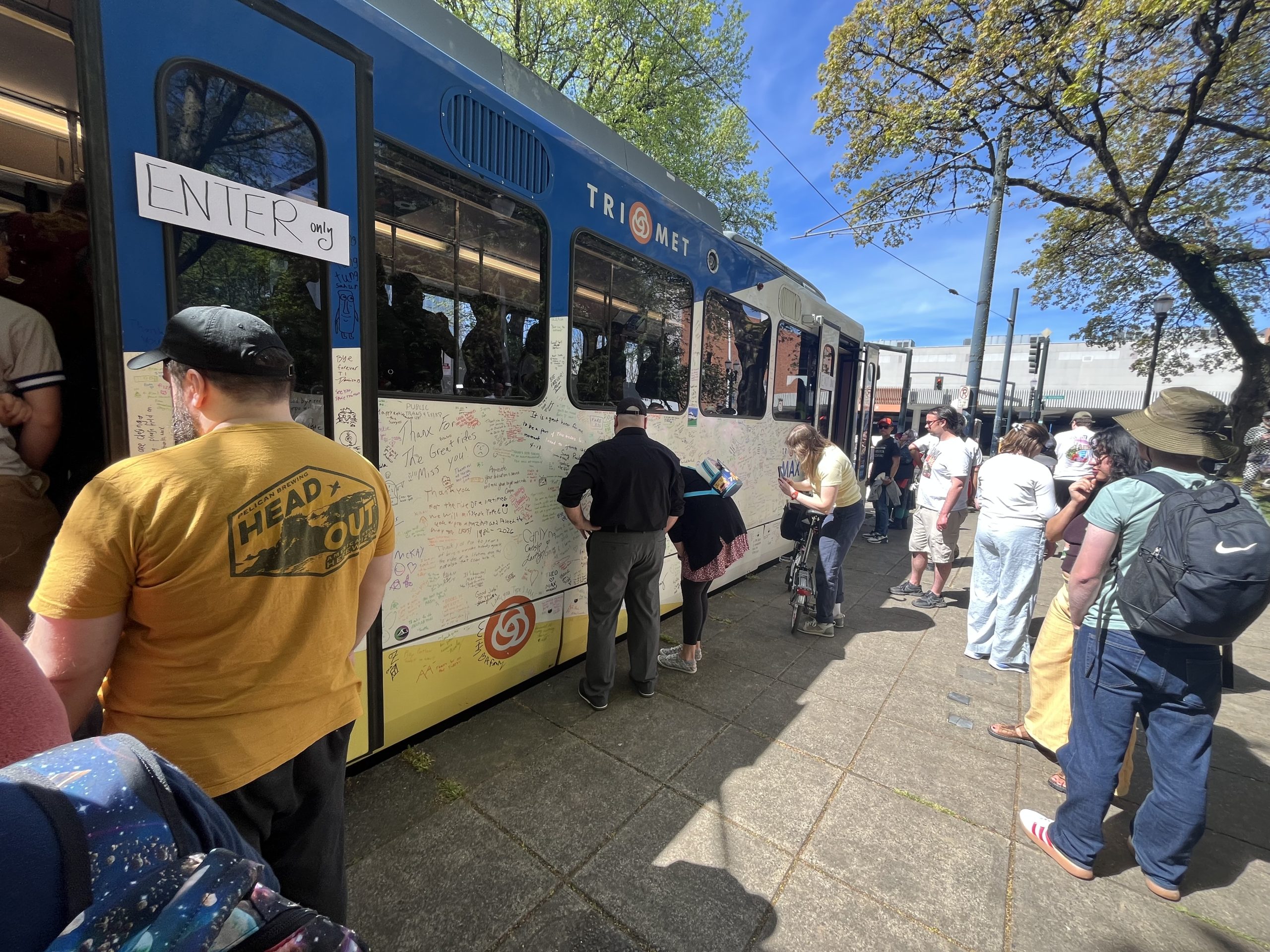
""They were supposed to last 30 years," says Tyler Graf, a public information officer at TriMet. "Thanks to our outstanding maintenance team, we've been able to keep them on the system for 10 extra years.""
""We can no longer source the replacement parts for these vehicles," says Graf, "and haven't for quite a while. Any time we needed a replacement part it had to be fashioned in-house.""
"One of the biggest issues with the Type 1 trains has nothing to do with technological issues, but with accessibility. In 1986, the only light rail cars on the market required riders to climb stairs in order to get to their seats."
"After the passage of the Americans with Disabilities Act of 1990, TriMet started exploring low-floor cars, many of which were already in use at the time by European transit systems."
TriMet's oldest MAX Type 1 trains, based on a Belgian design and introduced in 1986, are being retired after nearly 40 years. Originally expected to last 30 years, they remained in service due to excellent maintenance. However, sourcing replacement parts has become increasingly difficult and costly. Additionally, accessibility issues arose as the trains required riders to climb stairs, prompting the introduction of low-floor cars after the Americans with Disabilities Act of 1990. The Type 1 trains have traveled approximately two million miles during their operational life.
Read at Portland Mercury
Unable to calculate read time
Collection
[
|
...
]