"Instant cameras and short-form video have been running on parallel tracks, one about physical keepsakes you can hold, the other about clips that vanish into feeds. Instax has always been about handing someone a moment they can stick on a wall, while most video lives on screens. The question of what it would look like if those two ideas finally met in a single handheld object has been hovering for a while."
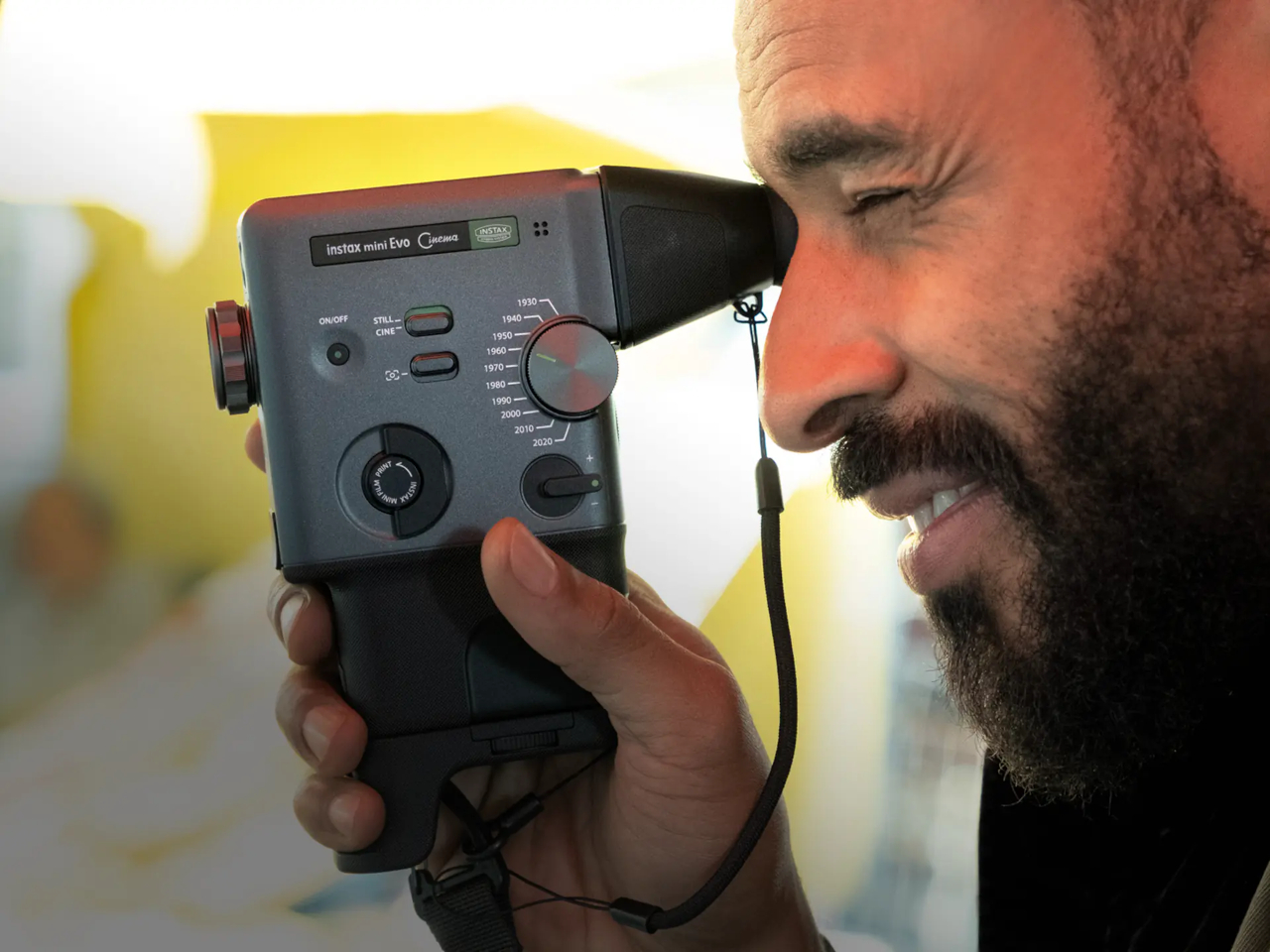
"The Eras Dial is a new control that dresses your footage in looks inspired by different decades. There are ten effects, from 1960's 8mm film to 1970's color CRT, 1980's 35 mm negatives, and a 2010 mode that feels like early smartphone filters, each with ten intensity levels. Visual textures, noise, tape flutter, and sound all get processed, so shooting can feel like stepping into another era with dial clicks marking each shift."
"The vertical grip borrows from Fujifilm's FUJICA Single-8 8mm camera, making it feel more like a tiny movie camera than a flat point-and-shoot. The tactile Eras Dial and Print Lever that mimics winding film turn printing into a small ritual. You can frame shots on the rear LCD or snap on the included viewfinder for a more immersive experience that feels surprisingly satisfying when you are used to phone cameras."
The Instax mini Evo Cinema combines instant-print photography with 15-second short-form video capture, producing instax mini prints that include QR codes linking back to the recorded clips. The camera features an Eras Dial offering ten decade-inspired effects with ten intensity levels, applying visual textures, noise, tape flutter, and sound processing to footage. A vertical grip influenced by the FUJICA Single-8 evokes a miniature movie camera, while tactile controls like the Eras Dial and a Print Lever create a ritualized printing experience. Framing options include a rear LCD or an attachable viewfinder, and users select frames from clips to print physical cards that double as portals to motion.
Read at Yanko Design - Modern Industrial Design News
Unable to calculate read time
Collection
[
|
...
]