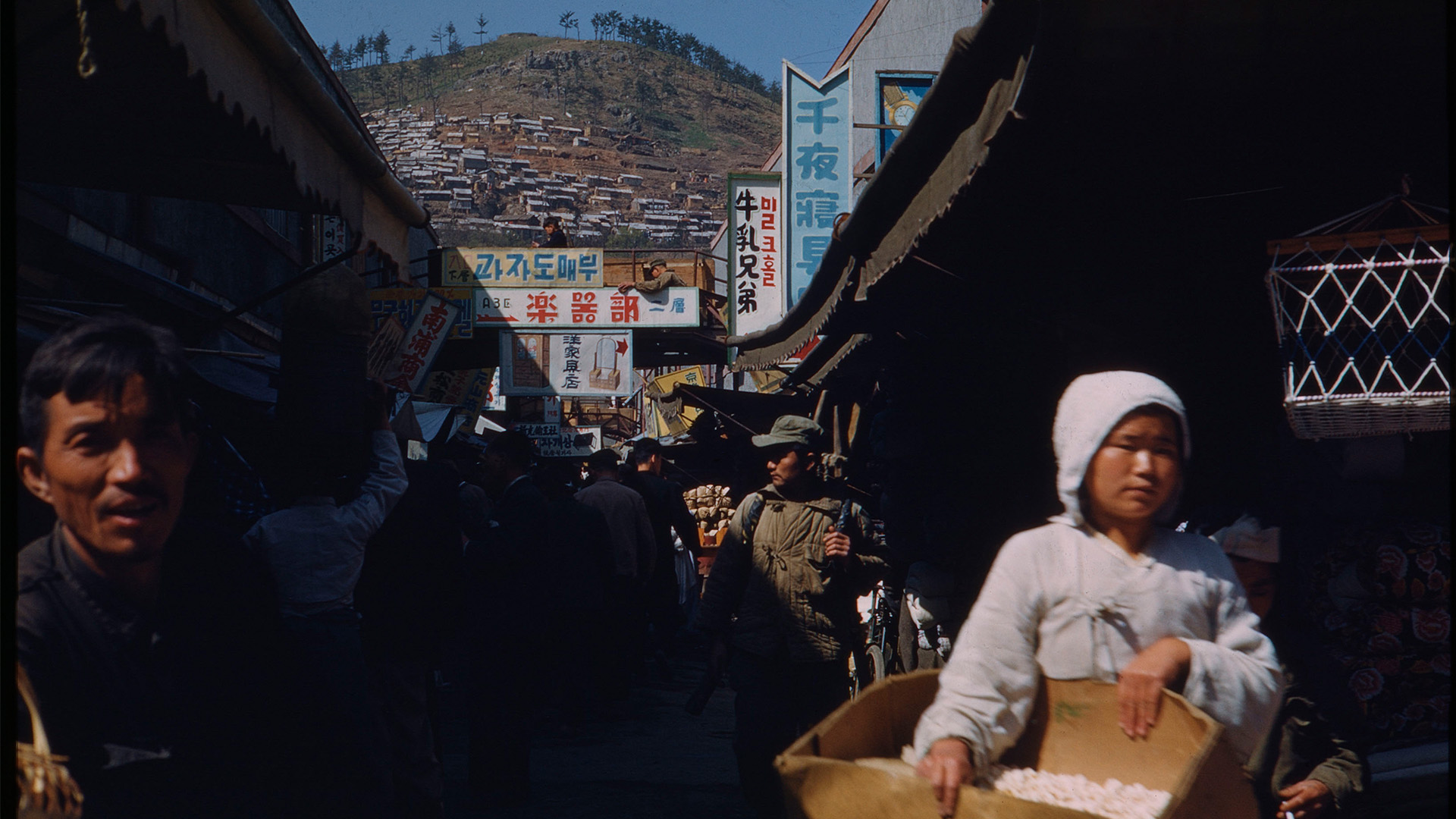
A photographer offered the Peabody Museum over 3,000 images taken in Pusan, South Korea, at the end of the Korean War. The museum sought expertise from a Korean history professor at Harvard, and the photographs were framed as valuable for Harvard Museums and Korean studies. A new book format makes the images available and adds context about America’s “forgotten war.” The Korean War is described as receiving less attention because it falls between World War II and the Vietnam War in historical coverage. The conflict is estimated to have killed, wounded, or left missing about three million Koreans and displaced about five million, with many losing family connections. Many displaced people found relative safety in Pusan, now known as Busan.
"More than 20 years ago, the Peabody Museum of Archaeology and Ethnology got a call from a photographer named Roger Marshutz. He wondered if the museum would like more than 3,000 photos he'd taken in Pusan, South Korea, at the end of the Korean War. Not sure what to make of the inquiry, Rubie Watson, the first Howells Director of the Peabody Museum, reached out to Carter Eckert, then the Yoon Se Young Professor of Korean History at Harvard University."
"The book makes Marshutz's photos available in a new format and shares context on what has been called America's "forgotten war." "Roger Marshutz is one of the best photographers you've probably never heard of," said Kim's co-author, Ilisa Barbash, curator of visual anthropology at the Peabody Museum. Despite 37,000 Americans losing their lives in the Korean War, Barbash said, "It's called forgotten because it's sandwiched temporally between World War II and the Vietnam War, and received a lot less attention, ultimately, in the history books.""
"The war also profoundly shaped the Korean economy, its politics, and its culture. It is estimated that about 3 million Koreans - about one-tenth of the total population - were killed, wounded, or went missing during the three years of the conflict. Another roughly 5 million were displaced, fleeing north or south, with many becoming separated from family members and in some cases never to see them again. Many of those who fled south found relative safety in the southeast port city of Pusan, known today as Busan, in the region that was the only part of the"
Read at Harvard Gazette
Unable to calculate read time
Collection
[
|
...
]