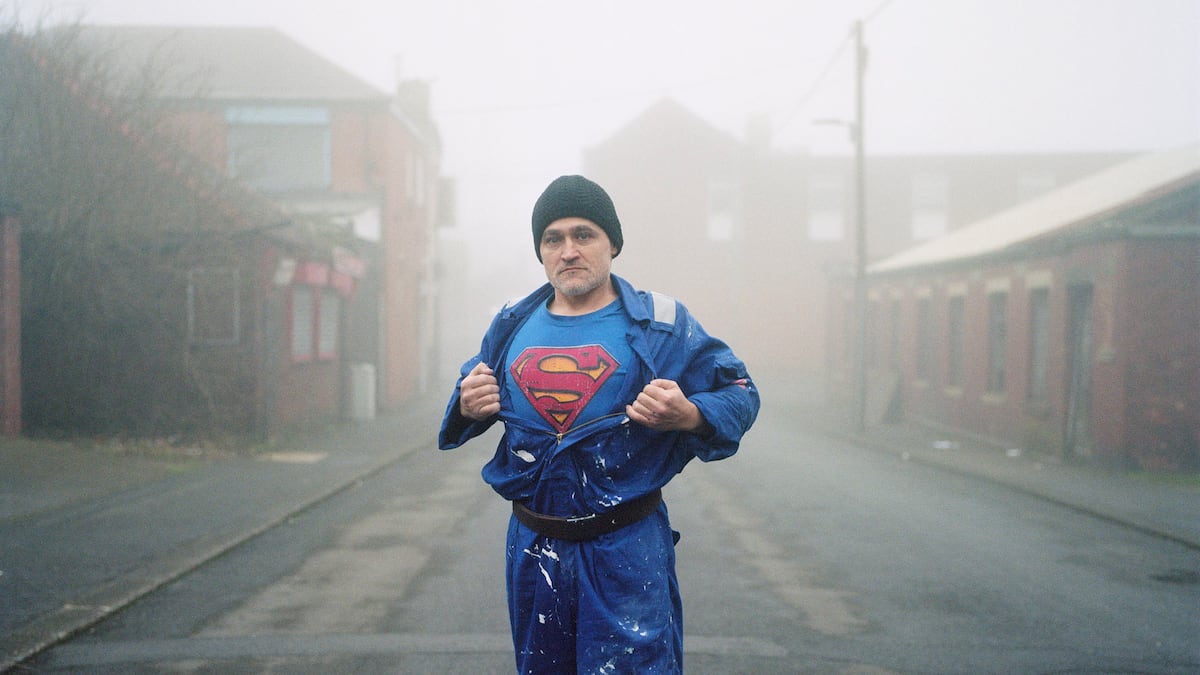
"As a child, Ed Alcock listened to the story of his great uncle Kendon's death at the age of 17. It happened at the bottom of the mine, his mother, Sheila, told him one day. He had been working there since he left school. A section of the gallery sank and a heavy crane fell on him, crushing him and causing head injuries. They took his body out of the mine, but he never regained consciousness."
"By then Ed had been living in Paris for years, first studying mathematics and eventually devoting himself to documentary photography. In the midst of the Brexit process, a grant from the National Center for Plastic Arts took him to Horden. He had never been there, but it was like coming home. It felt distant but also close: part of his identity. What he found was a town badly hit by poverty, drug addiction, alcohol and mental health problems, he says."
Ed Alcock reconstructed the life and death of his great-uncle Kendon through photographs, drawings and documents gathered in Horden. Kendon died at 17 when a gallery collapsed and a heavy crane crushed him, causing fatal head injuries; his body never regained consciousness. Kendon became a mythic working-class figure in a left-wing family. Alcock, who studied mathematics then documentary photography, returned during the Brexit period with a grant and visited Horden four times between 2023 and 2024. He found severe poverty, drug and alcohol problems and mental-health challenges alongside strong community solidarity, abandoned homes, squats, and enduring local identity.
Read at english.elpais.com
Unable to calculate read time
Collection
[
|
...
]