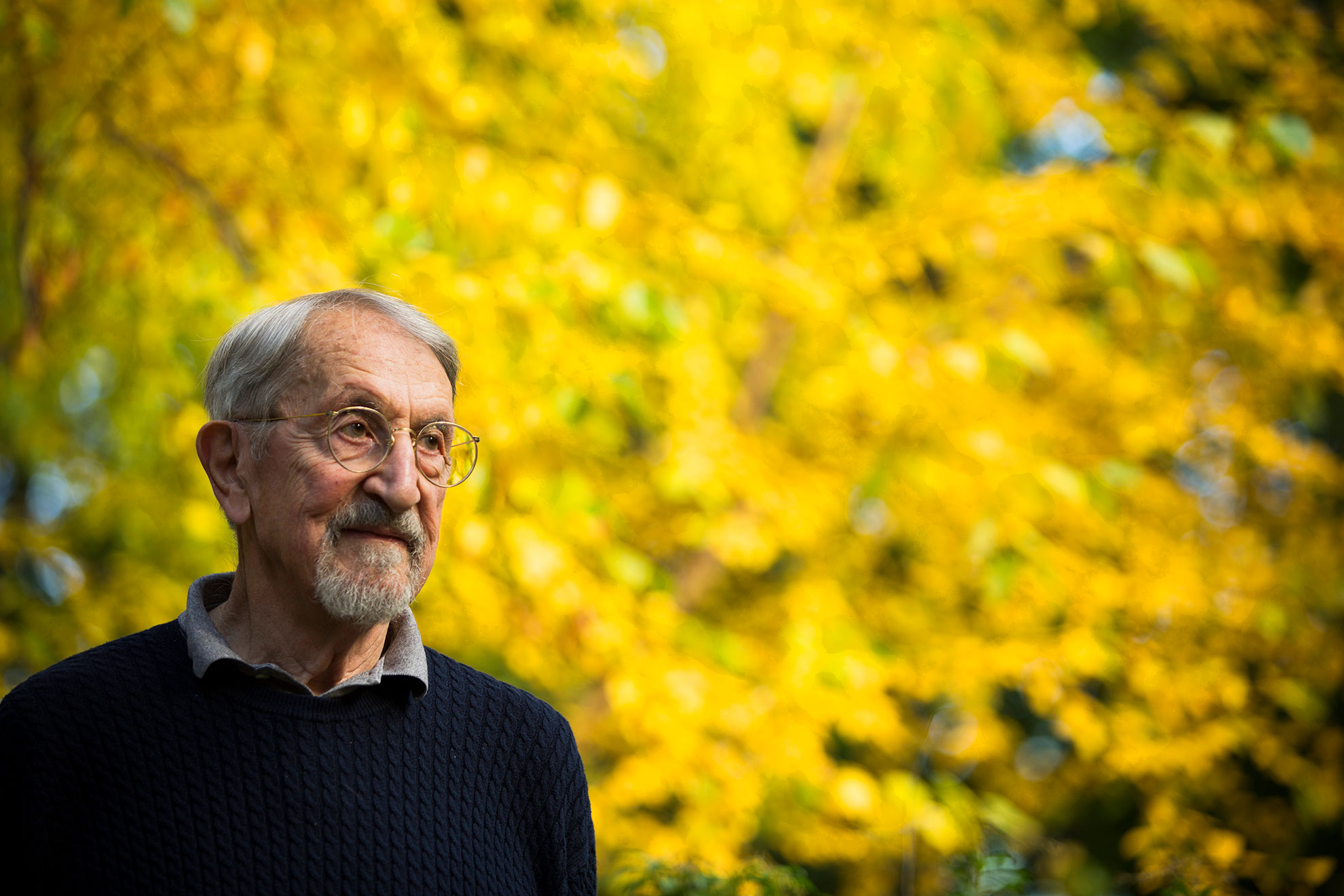
"Martin Karplus, the Theodore William Richards Professor of Chemistry, Emeritus, at Harvard University and a 2013 Nobel Laureate in Chemistry, died on Dec. 29, 2024, at the age of 94. His work - entirely computational but always inspired by experimental observations - spanned chemistry, physics, and biology. In a career that extended over more than half a century and resulted in nearly 900 publications, Karplus transformed our understanding of molecular systems through his groundbreaking work in computational modeling by molecular dynamics simulations."
"Karplus was born in Vienna, Austria, on March 15, 1930, into a family with a long and distinguished medical lineage. His early years were marked by a culture of intellectual richness and suburban comfort in the wine-growing district of Grinzing, but his peaceful Viennese childhood was shattered by the rise of Nazism and the Anschluss in March 1938. Within days, Karplus, his brother, Robert, and their mother fled by train to Switzerland, while his father was forced to remain behind in a Viennese jail as a hostage to ensure the family's assets were not smuggled out."
"The family eventually secured visas for the United States through an affidavit provided by his uncle's employer in Boston. The Karplus family arrived in New York on Oct. 1, 1938, and settled in the Brighton neighborhood of Boston, where they faced a starkly different economic reality than their comfortable life in Vienna. Karplus quickly adapted and became a street kid who played stick-ball, while temporarily refusing to speak German to be accepted as an American."
Martin Karplus, Theodore William Richards Professor of Chemistry Emeritus at Harvard and a 2013 Nobel Laureate in Chemistry, died on Dec. 29, 2024, at age 94. His work was entirely computational yet guided by experimental observations, spanning chemistry, physics, and biology. Over more than half a century, he produced nearly 900 publications and transformed understanding of molecular systems through groundbreaking computational modeling using molecular dynamics simulations. Born in Vienna on March 15, 1930, he experienced disruption after the rise of Nazism and the Anschluss in March 1938. He and his brother fled to Switzerland while his father was held as a hostage. The family later reached the United States and settled in Boston, where he adapted to new economic conditions.
Read at Harvard Gazette
Unable to calculate read time
Collection
[
|
...
]