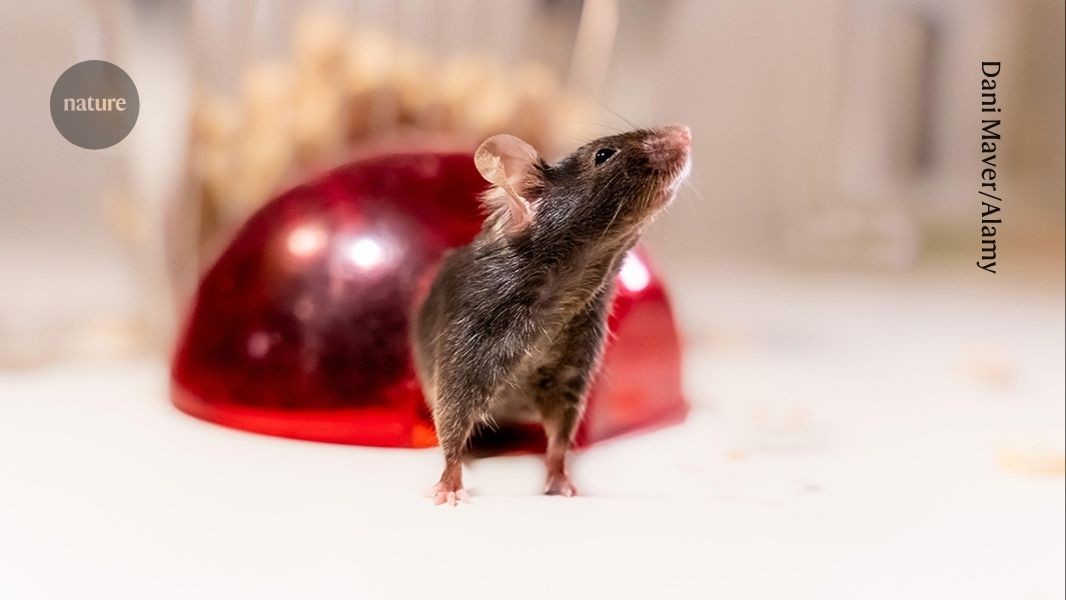
"Half of laboratory mice are not what scientists think they are, a genetic analysis of hundreds of strains that are distributed globally for animal research has found. The study, published today in Science, uncovered widespread inconsistencies between the reported names of mouse strains and their actual genetic makeup. The mismatches have the potential to compromise the reproducibility of mouse studies and undermine research conclusions, scientists say."
""This study is another wake-up call for biomedical research. If we don't fully understand the genetics of the mice we're using, we risk misinterpreting how diseases actually work," says Daniel Rawle, an immunologist at the QIMR Berghofer research institute in Brisbane, Australia. Rawle has first-hand experience of the trouble that a mislabelled mouse strain can cause."
"In a 2022 study, he and his colleagues uncovered discrepancies in the genotypes of mice engineered to lack an immune protein called granzyme A. The errors had given researchers the false impression that deletion of the gene encoding granzyme A protected mice from a crippling type of arthritis caused by infection with the chikungunya virus. Such problems can emerge when scientists try to move a genetic manipulation, such as a gene deletion or 'knockout', from one mouse strain to another."
"Introducing one genetic change - such as a gene knockout - into a mouse strain requires cross-breeding mice over 10-20 generations, while keeping meticulous records to ensure that errors aren't made. Cutting corners can cause problems. For example, if this cross-breeding process is not completed fully, genetic variation in"
Genetic analysis of hundreds of globally distributed mouse strains found widespread inconsistencies between reported strain names and actual genetic makeup. These mismatches can compromise reproducibility and undermine research conclusions. Mislabeling can lead to incorrect interpretations of disease mechanisms, including false beliefs about how gene deletions affect susceptibility to infection-driven arthritis. Problems can arise when genetic manipulations such as knockouts are moved between strains through cross-breeding over 10–20 generations. Incomplete cross-breeding or inadequate record-keeping can leave unintended genetic variation, producing results that do not reflect the intended genetic change. The findings indicate a need for better understanding and verification of mouse genetics used in biomedical research.
Read at Nature
Unable to calculate read time
Collection
[
|
...
]