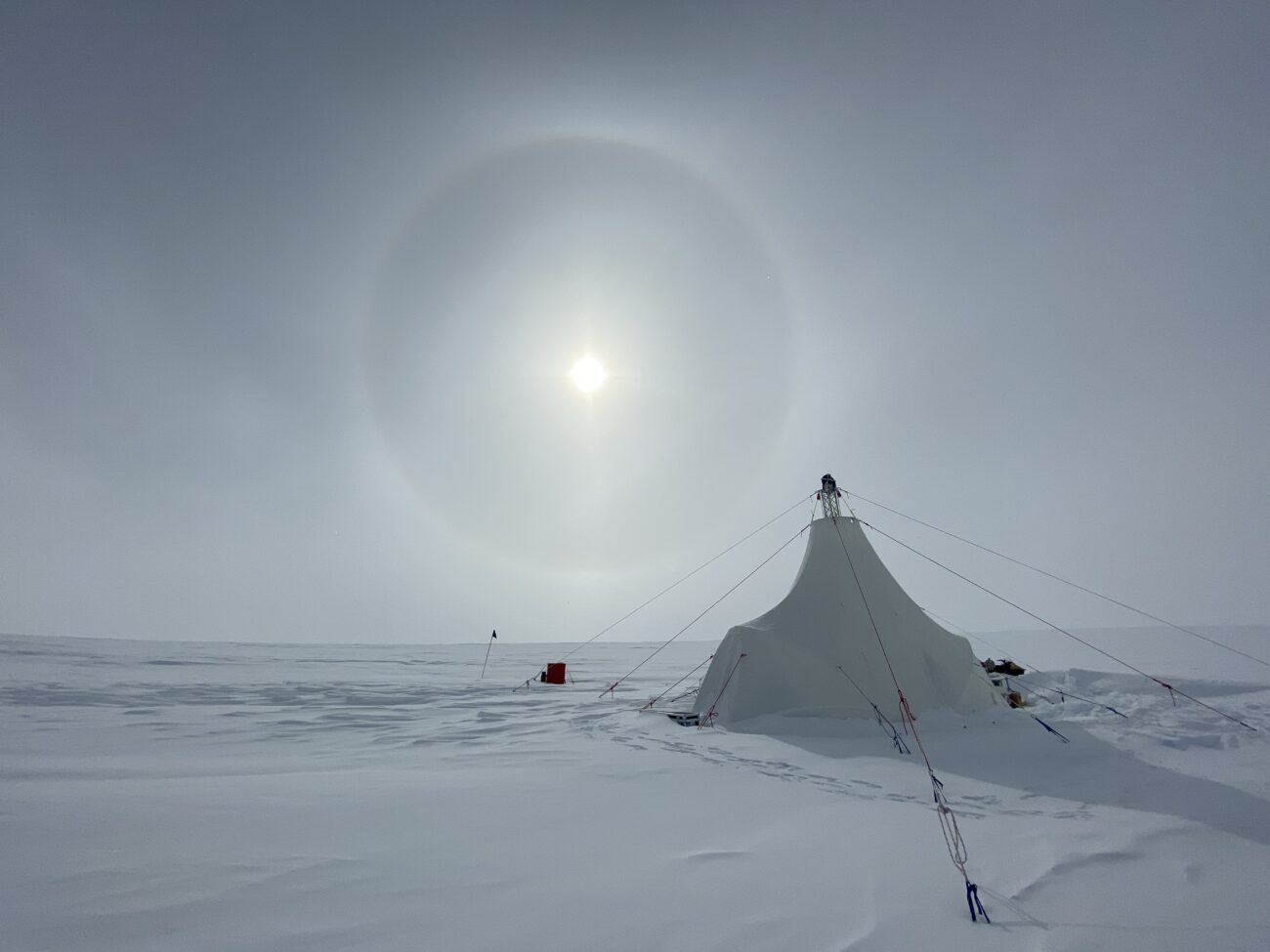
Dust trapped in a coastal Antarctic ice core records changes during the Last Interglacial warm period about 129,000 to 116,000 years ago. Chemical signatures in the dust identify source regions around the Ross Sea. During warmth, dust from volcanic and ice-free areas near Antarctica replaced dust from South America, which dominated during colder conditions. The replacement indicates major environmental and wind-pattern changes tied to retreat of the West Antarctic Ice Sheet. Larger, coarser dust particles suggest a local Antarctic source and a more open Ross Sea during warmer conditions. Climate simulations align with the ice-core evidence and raise concerns about future West Antarctic Ice Sheet stability and potential global sea-level rise of 3–5 meters.
"The research team found that dust from volcanic and ice-free regions around the Ross Sea replaced dust originating from South America, the dominant source during colder periods. This shift in origin they say reflects significant changes in the Ross Sea environment and regional wind patterns caused by a major retreat of the West Antarctic Ice Sheet."
"Published in Nature Geoscience, the study analyzed dust trapped in a coastal Antarctic ice core that captures the Last Interglacial (warm) period, approximately 129,000 to 116,000 years ago. Dust particles carry chemical signatures that reveal their origins, which allows researchers to trace how dust sources around the Ross Sea changed as the climate warmed."
"Larger, coarse dust particles preserved in the ice point to a local Antarctic source and a more open Ross Sea during warmer conditions. Climate simulations support the findings, raising concerns about future West Antarctic Ice Sheet stability and its potential to contribute 3-5 meters of global sea-level rise."
""We found a volcanic signature rarely seen before in Antarctic ice from a warm period, and it was really perplexing at first," said coauthor Sarah Aarons, a geochemist at the Lamont-Doherty Earth Observat"
Read at State of the Planet
Unable to calculate read time
Collection
[
|
...
]