Colossal Biosciences announced an artificial egg intended as a step toward resurrecting extinct birds such as New Zealand’s giant moa and Mauritius’ dodo. Many scientists disagree with de-extinction, arguing that extinction is permanent and that extinct animals cannot truly be brought back. For mammals, related living species can sometimes be used to carry lab-created embryos, but this approach does not work for birds. The proposed solution replicates the egg environment to support embryo development, delivering oxygen while keeping moisture and excluding contaminants. The system uses a semi-permeable silicone-based membrane in a rigid hexagonal support cup. Colossal reports hatching 26 chickens, but provides limited data on embryo numbers, loading, survival duration, or health outcomes.
"Colossal Biosciencethe same company that claimed to de-extinct the dire wolf and touted a woolly mouse bearing mammoth genesannounced the development of an artificial egg that it says is a step toward resurrecting extinct birds including New Zealand's giant moa and Mauritius' famous dodo. Many scientists disagree with the entire notion of de-extinction. Nothing will ever bring back a mammoth; nothing will ever bring back a dodo, says Victoria Herridge, an evolutionary biologist at Sheffield University in the U.K. Extinction really is forever."
"In past work in mammals, scientists have proposed using closely related, still existent species to impregnate with lab-created embryos carrying the genetic material of an extinct species. That isn't possible for birds, however. Instead, something replicating the environment inside an egg is needed, and while scientists have tried to develop egg-free incubation systems, these have had minimal success. According to a Colossal Biosciences press release, its scientists developed a semi-permeable silicone-based membrane housed inside a rigid hexagonal support cup."
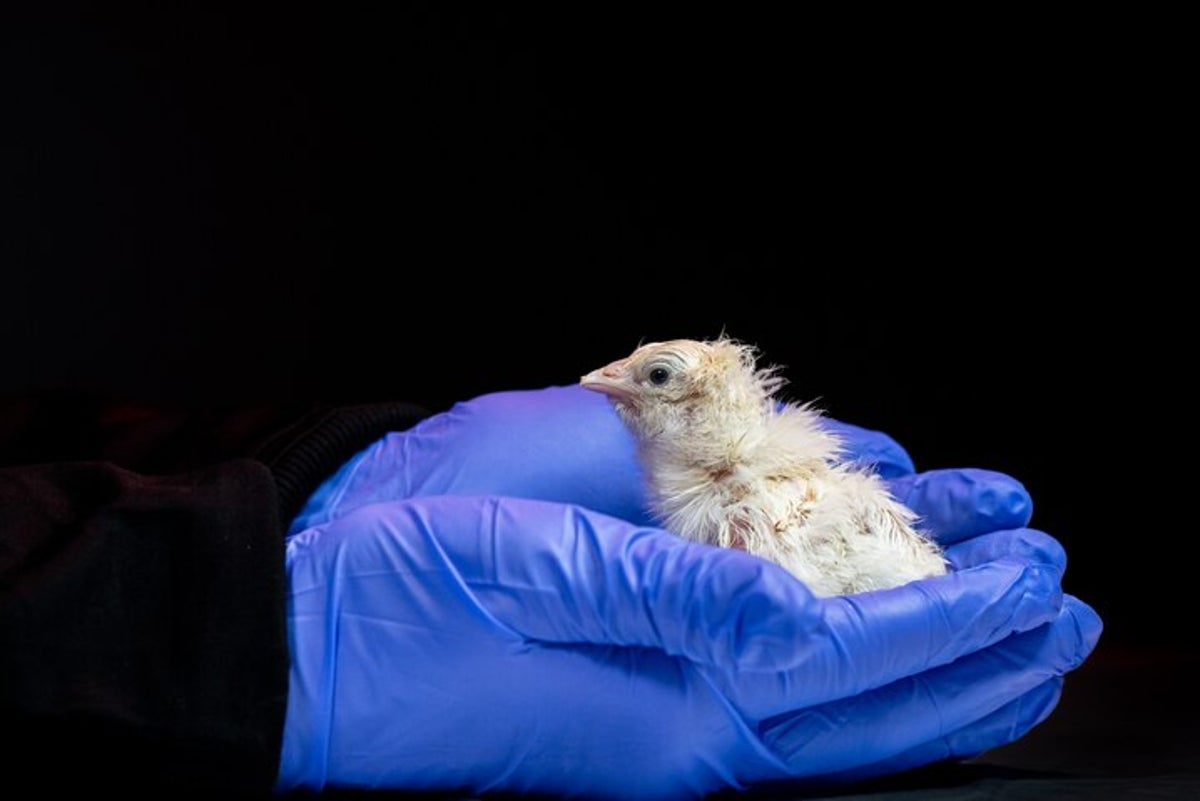
"Colossal says the system will work for any size of egg, whether it hatches a hummingbird or a moa, and that it had successfully hatched 26 chickens. But the release offered no detail on how many embryos were originally made or how many were loaded into the facility, how long the chicks survived, or anything that speaks to their health. Colossal Biosciences did not respond to a request for comment."
Read at www.scientificamerican.com
Unable to calculate read time
Collection
[
|
...
]