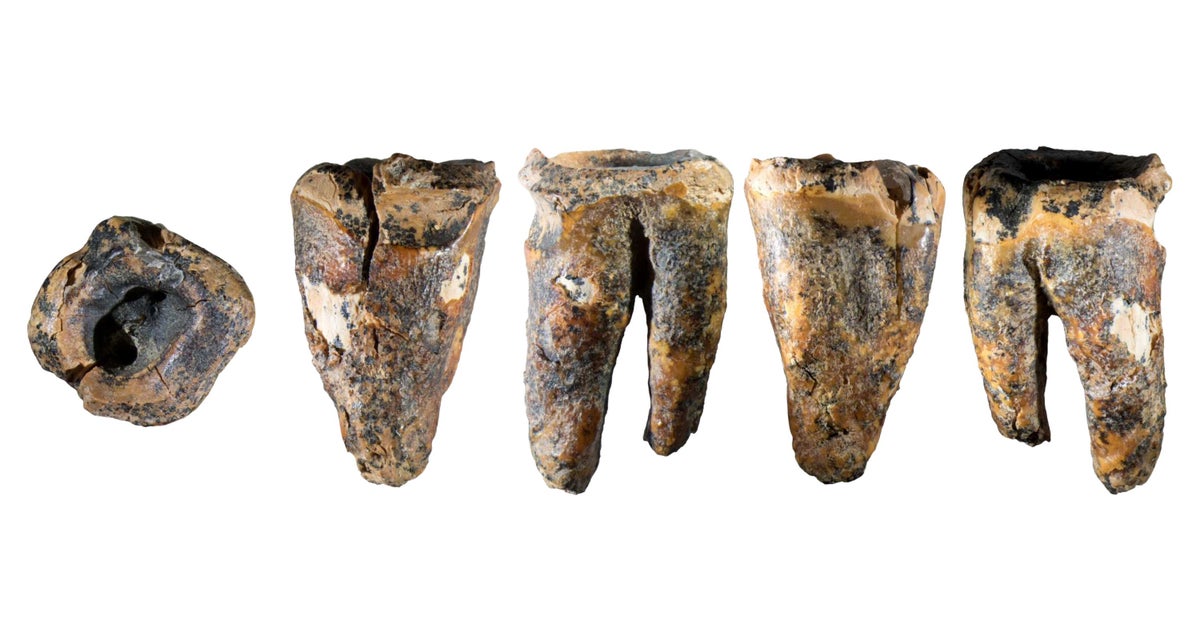
"Researchers analyzed a Neanderthal tooth that they say bears the unmistakable damage of intentional drilling. If that's true, it may be early evidence of complex logical thought in Neanderthals, says archaeologist Lydia Zotkina, a co-author of the new paper. The discovery would mark the earliest evidence of dental work in a species of human and would predate evidence of dentistry in homo sapiens by more than 40,000 years."
"It is the oldest evidence of this kind of behavior, says Matthew Skinner, a paleoanthropologist at the Max Planck Institute for Evolutionary Anthropology in Leipzig, Germany, who was not involved in the research, adding that it provides insights on the cognitive abilities of Neanderthals."
"But other experts say the apparent discovery may not be so clear-cut. Christopher Dean, an emeritus professor of anatomy at University College London, who was also not involved in the study, says the hole could have been caused by an injury or some other trauma, while the scratch marks could have come from a crude toothpickwhich previous discoveries suggest Neanderthals used."
A Neanderthal tooth from Russia’s Chagyrskaya Cave shows damage interpreted as intentional drilling, including a large vertical hole through the crown down to the pulp and circular scratch marks. The findings are presented as the earliest evidence of dentistry in any human species, predating similar evidence in Homo sapiens by more than 40,000 years. Researchers link the pattern to complex logical thought and cognitive abilities. Other experts caution that the hole could result from injury or trauma and that scratch marks could come from a crude toothpick, based on prior evidence of Neanderthal tool use.
Read at www.scientificamerican.com
Unable to calculate read time
Collection
[
|
...
]