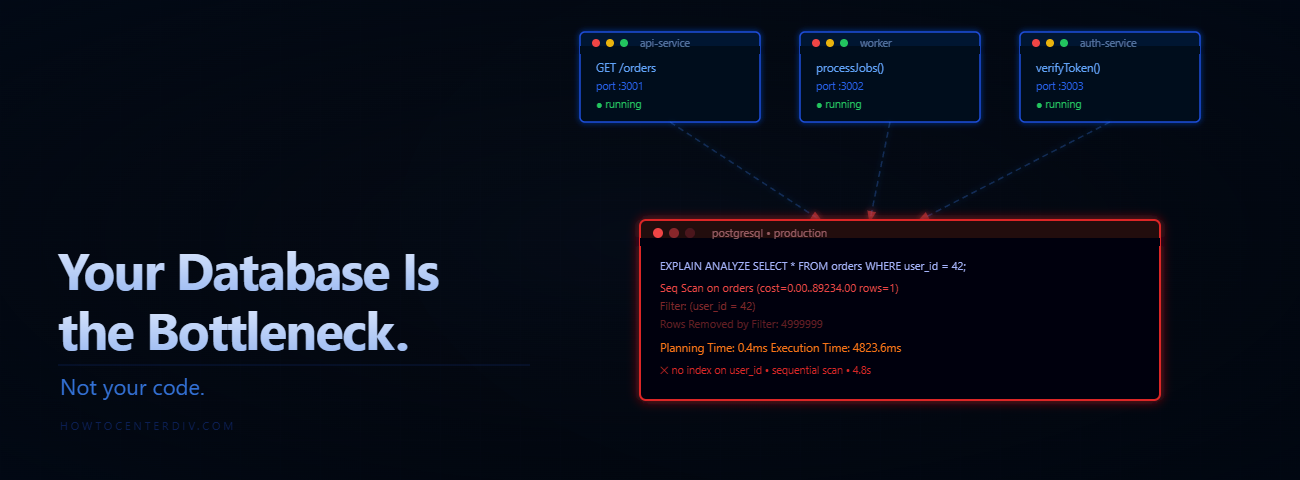
"The database was the problem the whole time. Fix N+1 queries and missing indexes before you touch anything else. App is slow. Someone swaps the framework. Still slow. Finally somebody opens up the query plan and there it is - a sequential scan across 4 million rows because nobody put an index on user_id."
"Most backend devs have never been taught to read a query plan. Bootcamps don't go there, tutorials barely mention EXPLAIN, and you end up figuring it all out at 2am during a production fire. After that you never forget it. But it shouldn't take a production incident to learn this stuff."
"N+1 hides in dev. You've got 10 rows locally, it returns instantly, you move on. Deploys, data piles up, and six months from now somebody files a Jira ticket about the orders page taking 8 seconds. By then everyone forgot this code existed."
Performance issues in applications are frequently attributed to frameworks or caching solutions, while the real problem often lies in the database. Missing indexes and N+1 queries can cause significant slowdowns, yet developers often neglect to analyze the database first. Many backend developers lack training in reading query plans, leading to late-night troubleshooting during production issues. N+1 queries can remain hidden during development, only to resurface as performance bottlenecks after deployment. ORM tools can obscure these issues, making it essential for developers to pay close attention to database performance.
Read at howtocenterdiv.com
Unable to calculate read time
Collection
[
|
...
]