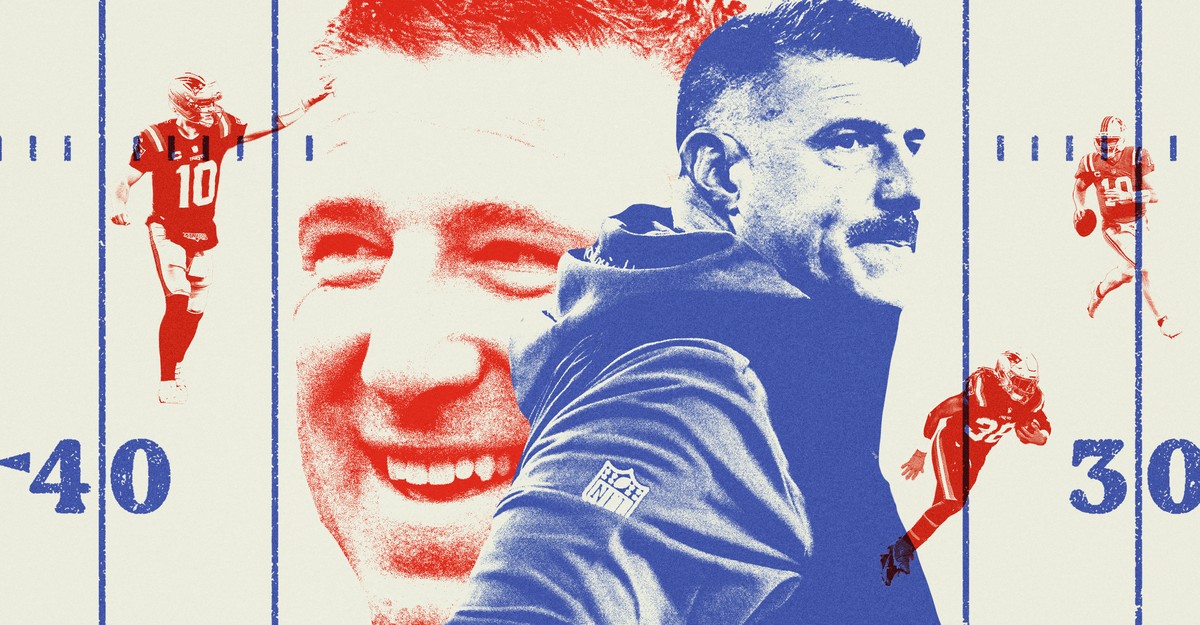
"Mike Vrabel leads from his ventricles-not from shallow-chested sentiment but from the pump action of his brawny heart, out of which blood occasionally makes its way to spurt from a split lip after a head bump from one of his players. During the team's playoff run, the defensive tackle Milton Williams gave Vrabel a celebratory helmet to the mouth. "I forgot Vrabes ain't got no helmet on," Williams said, to which Vrabel, a former linebacking great, replied, "I've been hit harder than that.""
"Last January, he took over a franchise that had been 4-13 in each of the past two seasons and, with a combination of hard know-how in football technique and light-handed locker-room authority, judo-flipped the team to 17-3 and a spot in the Super Bowl. A man who often seems ready to rush the field to make a tackle himself, he brings to his coaching a been-there-ness, and a drollery that treats football as the played game it is, not as the grimmest endeavor in the world."
"At the Patriots' opening offseason workout in New England, he startled the players when one of the the first things he asked them to do was the "victory formation," the kneel-down play to run out the clock when a game is won. It's a routine action that doesn't require much except snapping the ball, and it's usually among the last things a team practices. Vrabel's message: We intend to run this play a lot."
Mike Vrabel transformed the New England Patriots from back-to-back 4-13 seasons to a 17-3 record and a Super Bowl berth in one year. He combines detailed football technique with light-handed locker-room authority and physical, hands-on intensity. He set high expectations immediately, rehearsing routine plays like the victory formation and publicly declaring goals to win the division. He overhauled more than half the roster and released longtime veterans to reshape the team culture. His persona blends been-there toughness with droll humor, treating football as a played game rather than a grim endeavor, and he models resilience after enduring physical hits.
Read at The Atlantic
Unable to calculate read time
Collection
[
|
...
]