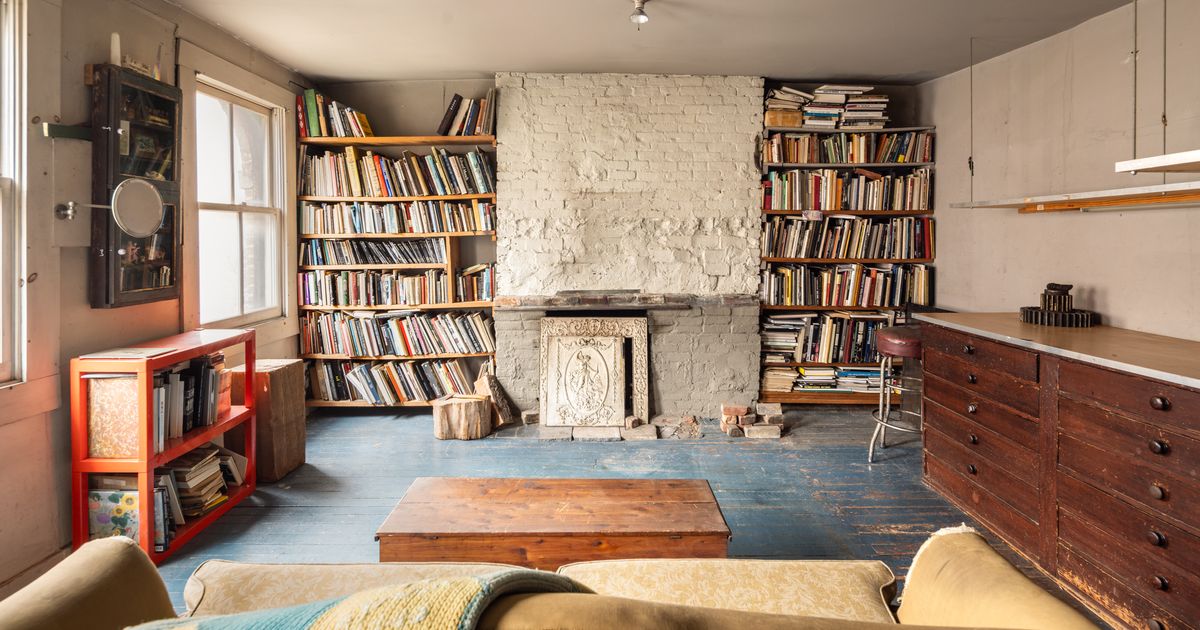
"For more than 40 years, 7 Bleecker was Frank's studio and home, the place where he snapped his friend Allen Ginsberg, shot sections of his experimental films (Home Improvements and C'est Vrai!), and worked with the bands he put on film - Patti Smith, New Order. Unlike other artists who showed at MoMA and sold at auction for hundreds of thousands, Frank made himself easy to find - setting out a folding chair onto the sidewalk."
"The three-story brick building looks like it might have been squeezed into a busy row. But it was actually one of the block's earliest, an 1817 home built on 'what was essentially still a field' by a prominent owner (James Roosevelt, great-grandfather of FDR). As the city grew around it, tenants included a laundry, decades of fur dealers, and a stationery shop."
"When Frank and Leaf arrived, the block had already been staked out by artists, who had founded an alternative gallery and studio space across the street at 10 Bleecker. Frank and Leaf planted a tree out front and treated the old ground-floor space, just a few steps up, as a studio."
7 Bleecker Street served as Robert Frank's studio and residence for more than four decades, becoming a pilgrimage site for photographers studying his influential work. The three-story brick building, constructed in 1817 by James Roosevelt, originally housed various commercial tenants before Frank and Leaf transformed it into a creative workspace. Frank famously made himself accessible to visitors, often sitting on the sidewalk with his wife. The studio hosted significant cultural moments, including photography sessions with Allen Ginsberg, experimental film production, and collaborations with musicians like Patti Smith and New Order. Following Frank's death in 2019 and Leaf's passing in 2024, the property enters the market for the first time since the couple arrived as renters in the late 1970s.
Read at Curbed
Unable to calculate read time
Collection
[
|
...
]