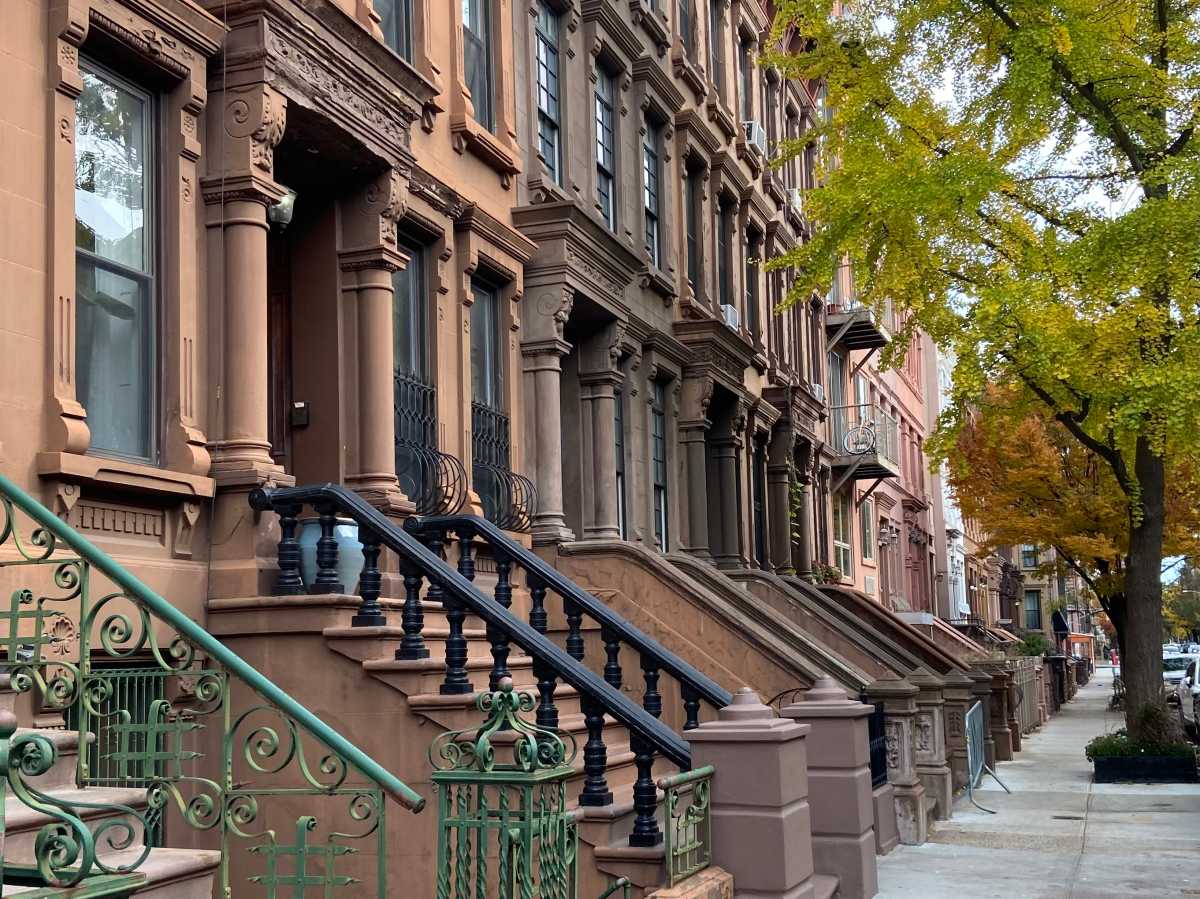
"In the 1970's, John Lennon and Yoko Ono rented the top floor of a modest multi-family brownstone at 105 Bank Street in Greenwich Village. They liked the relative anonymity of living in the area and the community of five other families with which they shared the building. Next door at 107 Bank, composer John Cage and his partner, the dancer and choreographer Merce Cunningham, shared their building with another family. Today, those two buildings have been combined and transformed into a single mega-mansion townhouse sold for over 70 million dollars—one of the most expensive residential deals in Lower Manhattan."
"Over the past two decades, New York City has lost at least 9,300 housing units to similar conversions. At a time when the city's vacancy rate is just 1.4%, we cannot afford to lose homes that already exist. When multi-family buildings are converted into single-family residences, the impact extends beyond the loss of units. Fewer residents mean fewer customers for local businesses, less activity on our streets, and a gradual erosion of the neighborhood fabric that makes New York City special."
"That is why we introduced the Teardown Tax Act. Our bill imposes a $50,000 surcharge for every residential unit removed and not replaced from the housing supply during multi-family-to-single-family residential conversions. The revenue generated would be directed to the Landmarks Preservation Commission's Historic Preservation Grant Program, helping maintain and restore the buildings that anchor our neighborhoods. In this way, when housing units are lost, there is direct reinvestment in the affected communities."
"This proposal is not about stopping development. It is about aligning incentives so that development supports, rather than diminishes, our housing stock. And we know this approach can work. Chicago implemented a similar teardown tax in 2021 and has since"
John Lennon and Yoko Ono lived in a modest brownstone at 105 Bank Street, and John Cage and Merce Cunningham lived next door at 107 Bank Street. Those buildings have since been combined into a single luxury townhouse sold for over $70 million. Similar conversions have reduced New York City’s housing stock by at least 9,300 units over two decades. With a vacancy rate of 1.4%, the city cannot afford to lose existing homes. Conversions also weaken neighborhood life by reducing residents, customers for local businesses, and street activity. The Teardown Tax Act would impose a $50,000 surcharge for each removed and not replaced unit, funding historic preservation grants to reinvest in affected communities.
#housing-policy #zoning-and-conversions #new-york-city-real-estate #historic-preservation #vacancy-and-housing-supply
Read at www.amny.com
Unable to calculate read time
Collection
[
|
...
]