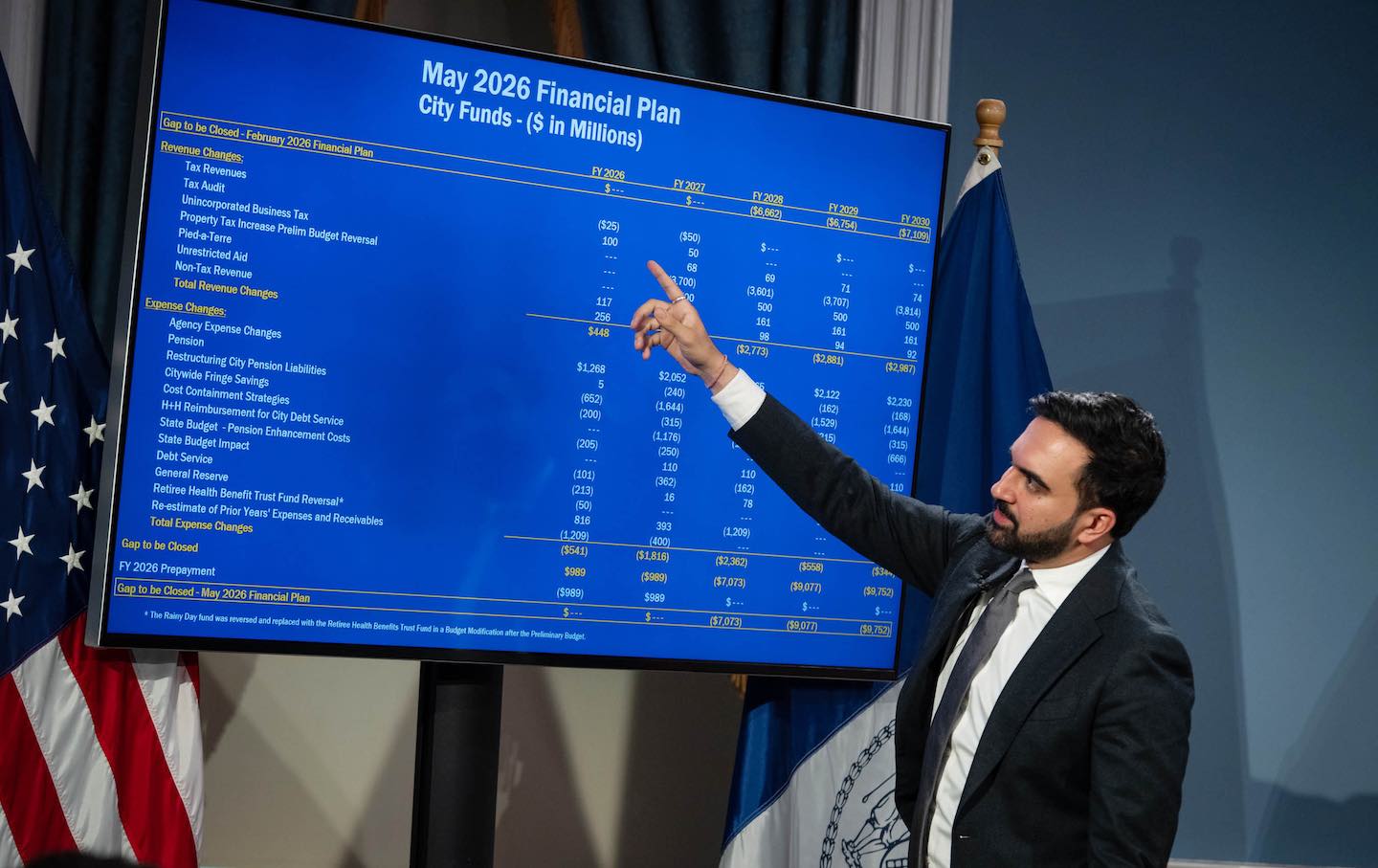
"Even getting to that point, from the $12 billion fiscal cliff he found on taking office would-or so the mayor claimed in March-require a raid on the funds the city is supposed to set aside for a "rainy day." And in the preliminary budget released in February, the mayor had also threatened that if Governor Kathy Hochul and the state legislature didn't let the city raise income taxes on the wealthiest New Yorkers (which would require permission from the state) the city would be forced to raise property taxes (which is the only major tax the city can raise without Albany's permission)."
"And yet there we were in City Hall's ornate Blue Room on Wednesday, watching as Mayor Mamdani, first deputy mayor Dean Fuleihan, and budget director Sherif Soliman took a victory lap in front of the assembled members of the press. The mayor and his team unveiled a $124.7 billion budget that they had managed to balance without raising income taxes on the rich or increasing taxes on the most profitable corporations-and without raising property taxes either. Was this some kind of secular-or, dare I say, socialist-miracle? Not exactly."
"Most of the heavy lifting was done by the governor and legislators in Albany, who, though still unable to come to a final agreement on their own budget, did include $4 billion worth of policy changes and extra funding for the city. Most of those funds are actually savings from delaying payments the city owes to fully fund municipal workers' pensions-the kind of under-the-radar creative"
New York City faced a large gap to reach a legally required balanced budget by the end of June. Earlier plans depended on state permission to raise income taxes on the wealthiest residents, otherwise the city would have to raise property taxes. Political resistance made property tax threats difficult. In City Hall, officials unveiled a $124.7 billion budget balanced without raising income taxes on the rich, increasing taxes on the most profitable corporations, or raising property taxes. Much of the progress came from Albany through $4 billion in policy changes and extra funding. Some of the funding reflected savings created by delaying payments needed to fully fund municipal workers’ pensions.
Read at The Nation
Unable to calculate read time
Collection
[
|
...
]