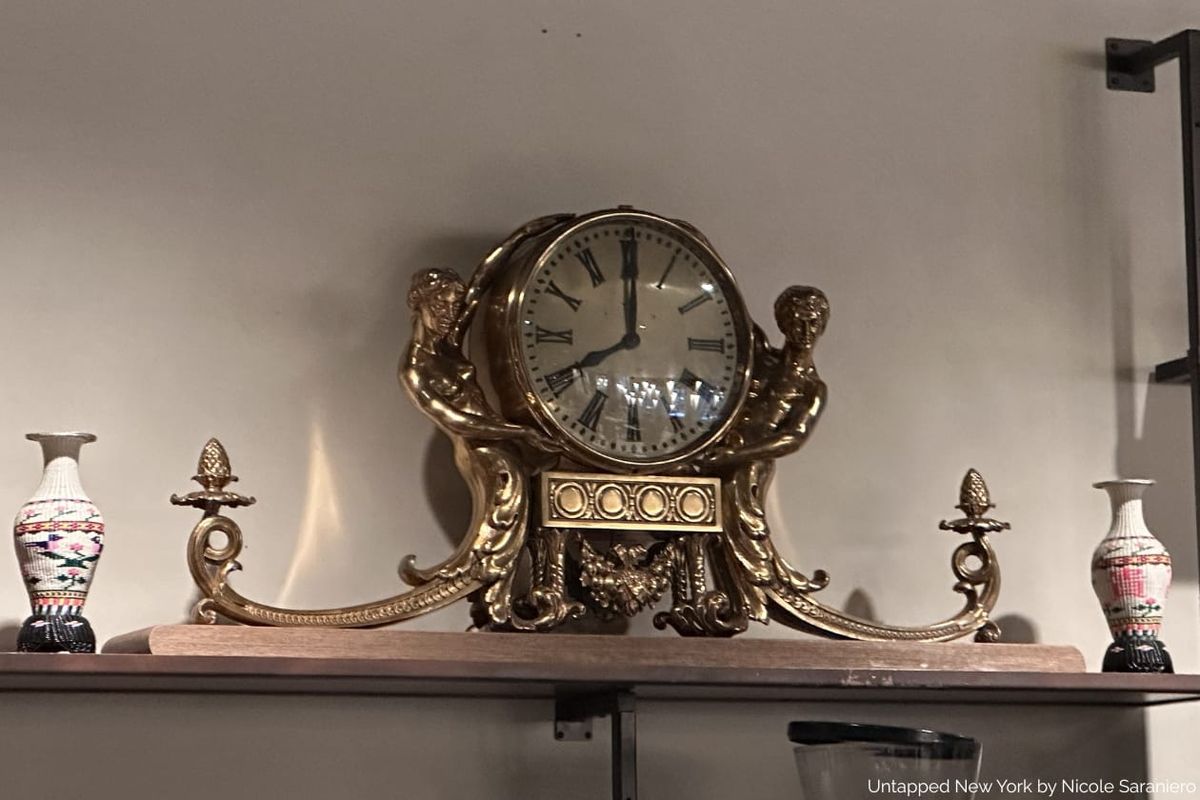
A bronze clock and a Guastavino-tiled tunnel remain from Manhattan’s lost Biltmore Hotel. The hotel opened on New Year’s Day 1913 and was designed by Whitney Warren and Charles Wetmore as a 26-story Neo-Classical building. The plan for Terminal City, intended to include cultural institutions, offices, and hotels, never fully materialized, and many structures were later demolished or altered beyond recognition. The Biltmore Hotel had one thousand rooms and amenities including a roof garden, early indoor swimming pool, Turkish baths, and winter ice-skating on the terrace. Its connection to Grand Central Terminal allowed elevators to bring guests directly into the hotel. Today, the Biltmore Room in the terminal sits beneath where the hotel stood.
"Hopeful romantics waiting for their dates, weary travelers with their luggage, and literary luminaries meeting their editors all shared a common meeting place in the lobby of Manhattan's lost Biltmore Hotel: under the clock. This iconic meetup spot was at the entrance to the Palm Court dining room where a large gilded arch stood, topped with an ornate timepiece. That bronze clock-and a Guastavino-tiled tunnel -are the only visible remnants of the hotel you can see today."
"The Biltmore Hotel opened on New Years Day 1913. Whitney Warren and Charles Wetmore designed the 26-story, Neo-Classical building. It was intended to be part of a larger development for the neighborhood called Terminal City. This master plan, which called for cultural institutions, office buildings, hotels, and more, never fully came to fruition, and many of the structures that were built have since been demolished or renovated beyond recognition-such as The Biltmore Hotel."
"Inside, the hotel contained one thousand rooms and amenities such as a roof garden, one of the first indoor swimming pools, Turkish baths, and sometimes in the winter, ice-skating on the terrace. The H-shaped design of the hotel made it possible for most rooms to have outside exposure. One of the best amenities was the ease with which guests could come and go using the hotel's connection to Grand Central Terminal."
"Elevators could sweep guests directly into the hotel from the terminal below. When you visit the Biltmore Room inside the terminal today (also known as the kissing gallery), you are right below where the hotel once stood."
Read at Untapped New York
Unable to calculate read time
Collection
[
|
...
]