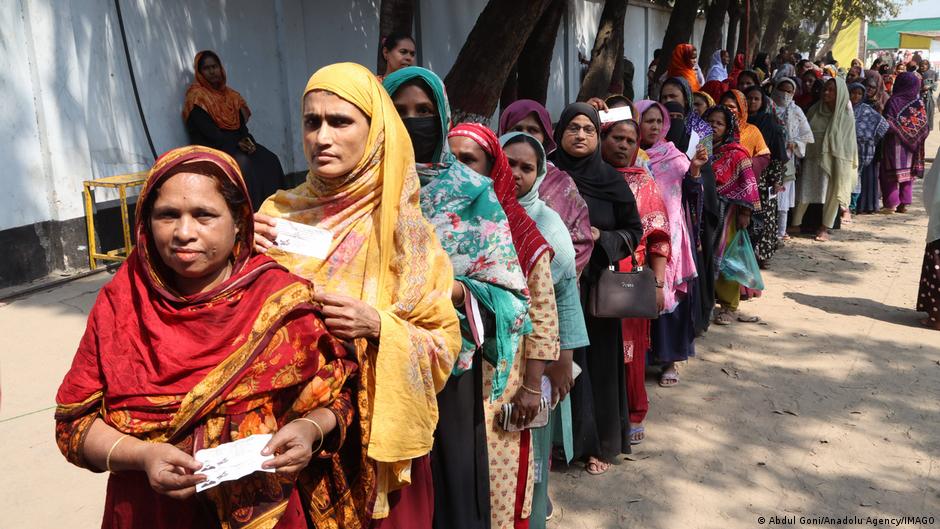
Bangladesh's center-right Bangladesh Nationalist Party (BNP) chief Tarique Rahman was sworn in as Prime Minister following the party's landslide victory in February 2024 elections. He succeeded an interim government led by Nobel laureate Muhammad Yunus, ending an 18-month period that began after a student-led uprising ousted former Prime Minister Sheikh Hasina in August 2024. Rahman's government committed to reforms including women's empowerment initiatives, approved through referendum. However, the new parliament and cabinet contain historically low female representation: only 7 female MPs among 300 directly elected members and 3 women in the 50-member cabinet. This represents the lowest female representation in 25 years. Analysts warn this gender gap will hinder women's empowerment efforts and reduce female voices in policy-making. Even the women's affairs minister is male. Female politician Rumeen Farhana, one of seven female MPs elected as an independent, noted the BNP prioritized male candidates.
"Of the 300 directly elected members of parliament (MPs), only seven are female, and the 50-member cabinet included only 3 female politicians. Analysts say the gender gap will impact women's empowerment, as their voices won't gain prominence in the policy-making process. Even Rahman's women's affairs minister is a man."
"Bangladesh's new government led by center-right Bangladesh Nationalist Party (BNP) chief Tarique Rahman was sworn in last week after his party's landslide victory in the February 12 general elections. This transition concludes an 18-month interim period following a bloody student-led uprising in August 2024, which ousted former Prime Minister Sheikh Hasina and ended her 15-year rule."
"Rahman plans to lead a 50-member Cabinet over the next five years, promising reforms that the BNP agreed to during the interim period, which were approved by a referendum alongside the election. Among those reforms are initiatives to empower women, which comprise around half of Bangladesh's 130 million voters."
Read at www.dw.com
Unable to calculate read time
Collection
[
|
...
]