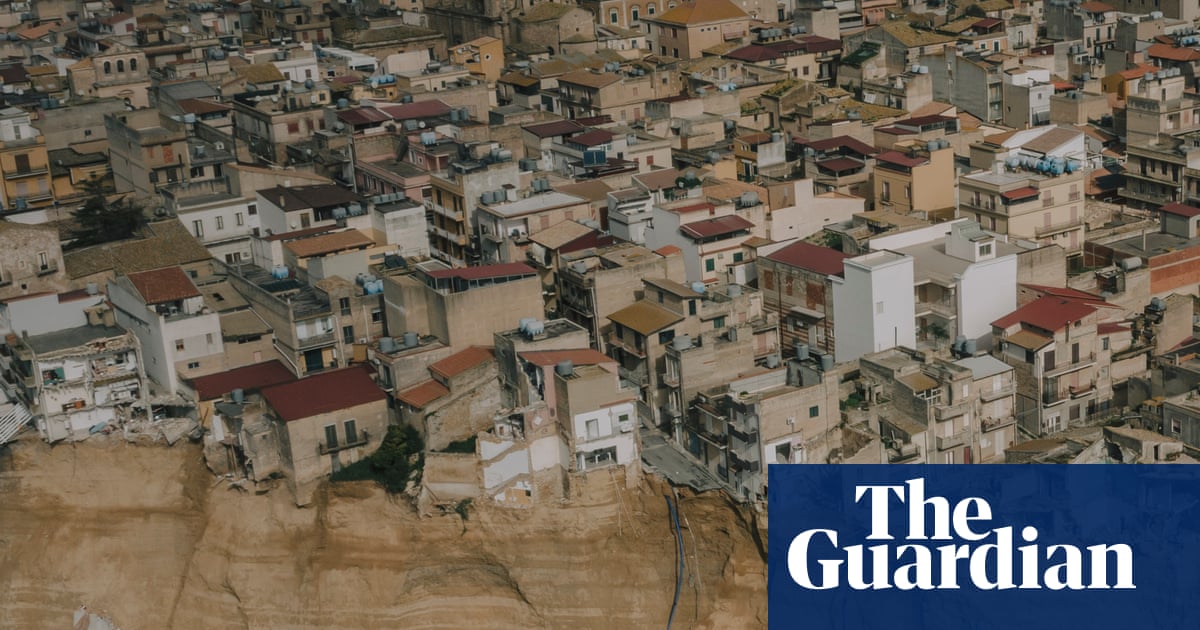
"For days, the 25,000 residents of the Sicilian town of Niscemi have been living on the edge of a 25-metre abyss. On 25 January, after torrential rain brought by Cyclone Harry, a devastating landslide ripped away an entire slope of the town, creating a 4km-long chasm. Roads collapsed, cars were swallowed, and whole sections of the urban fabric plunged into the valley below."
"Dozens of houses hang precariously over the edge of the landslide, while vehicles and fragments of roadway continue to give way, hour by hour, under the strain of unstable ground. Drone footage of Niscemi Drone footage of the landslide in Niscemi Authorities have evacuated more than 1,600 people so far. Entire sections of the historic centre are at risk, including 17th-century churches that could slide downhill at any moment."
"According to geologists and environmental experts, the landslide in Niscemi is the latest sign of how the climate emergency is reshaping the Mediterranean, where there has been indifference to decades of flawed building policies and an out-of-control model of urbanisation. It all happened in a matter of moments, said Salvatrice Disca, 70. She had been living in one of the homes now within the red zone designated by authorities as being at risk of collapse. The power went out, and a few minutes later the police knocked on our door. They told us to leave immediately, to abandon everything and take only the essentials a few blankets and our medicines."
For days the 25,000 residents of Niscemi have lived beside a 25-metre abyss after torrential rain from Cyclone Harry triggered a massive landslide that ripped away an entire slope and created a 4km-long chasm. Roads collapsed, cars were swallowed and whole sections of the town plunged into the valley. Dozens of houses now hang precariously over the edge while ground and roadway fragments continue to fail. Authorities evacuated more than 1,600 people and established red zones; many evacuees are staying with relatives, in care homes or temporary B&Bs. Geologists link the event to climate change, flawed building policies and unchecked urbanisation reshaping the Mediterranean.
Read at www.theguardian.com
Unable to calculate read time
Collection
[
|
...
]