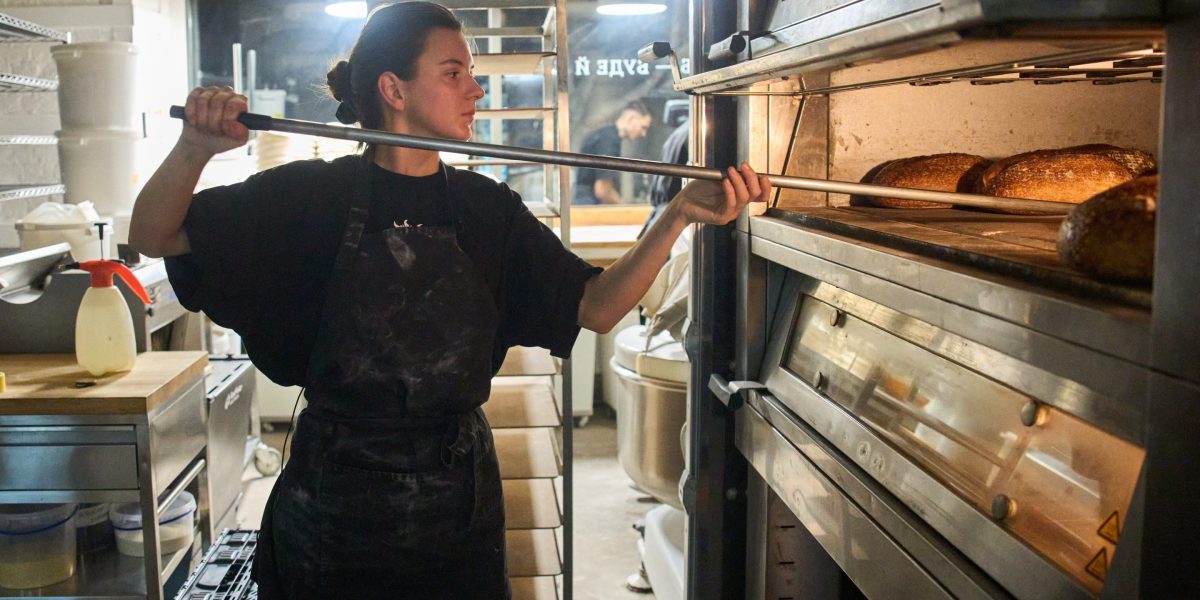
"It is pre-dawn in the historic Podil district of the Ukraine capital, Kyiv, and warm light from the Spelta bakery-bistro's window pierces the darkness outside. On a wooden surface dusted with flour, the baker Oleksandr Kutsenko skilfully divides and shapes soft, damp pieces of dough. As he shoves the first loaves into the oven, a sweet, delicate aroma of fresh bread fills the space."
"Seconds later the lights go out, the ovens switch off and darkness envelops the room. Kutsenko, 31, steps outside into the freezing night, switches on a large rectangular generator and the power kicks back in. It's a pattern that will be repeated many times as the business struggles to keep working through the power outages caused by Russia's bombing campaign on Ukraine's energy grid."
""It's now more than impossible to imagine a Ukrainian business operating without a generator," said Olha Hrynchuk, the co-founder and head baker of Spelta. The cost of purchasing and operating generators to overcome power outages is just one of many challenges facing Ukrainian businesses after nearly four years of war. Acute labor shortages due to mobilization and war-related migration, security risks, declining purchasing power and complicated logistics add to the pressure, officials say."
Pre-dawn in Kyiv's Podil district features Spelta bakery-bistro producing bread until sudden power cuts force staff to run a large generator to resume ovens. The bakery relies on a generator that burns about 700 hryvnias ($16) of fuel per hour and is operated roughly 10 to 12 hours daily, requiring constant refueling and flexible scheduling. Generators have become essential for Ukrainian businesses to cope with repeated outages after nearly four years of war, following the initial winter when the energy system became a target. Businesses also confront acute labor shortages from mobilization and migration, security risks, falling purchasing power, and complex logistics.
Read at Fortune
Unable to calculate read time
Collection
[
|
...
]