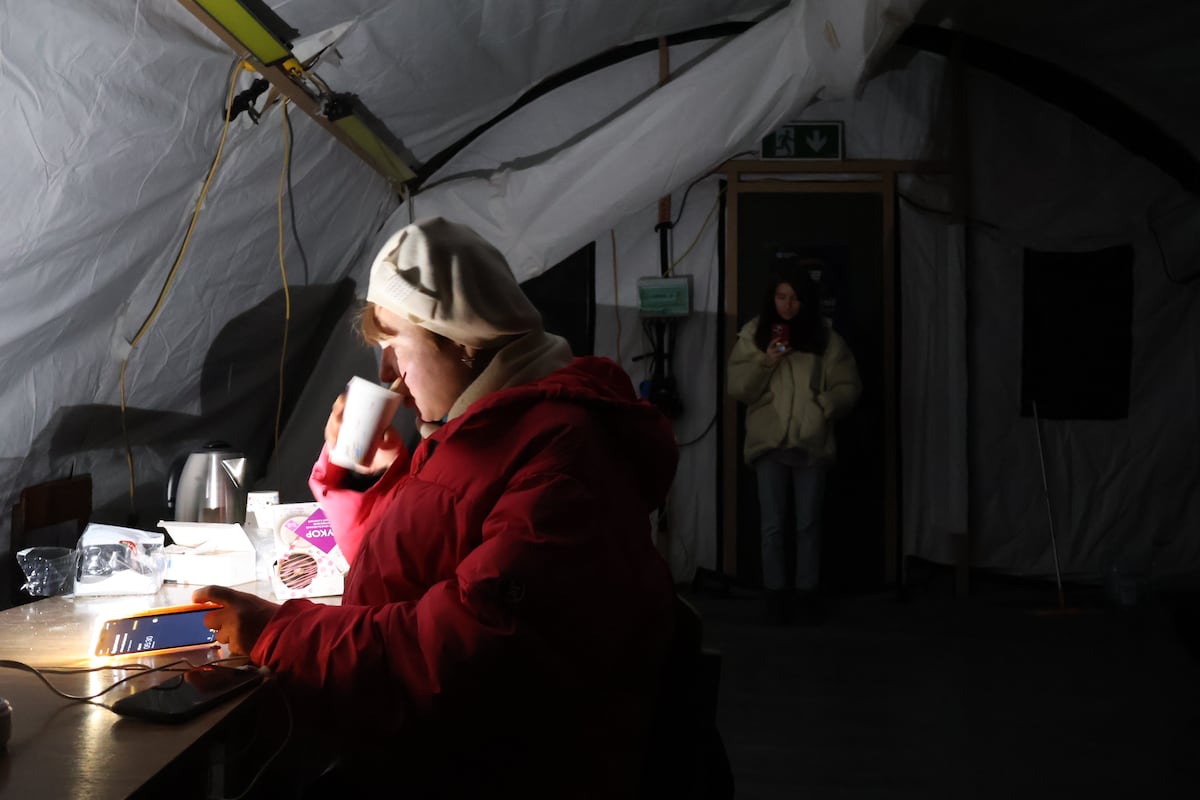
"A police car drives through the streets of Troieshchyna, broadcasting a list of addresses over a loudspeaker. These are the locations where residents can find the emergency shelters run by the State Emergency Service of Ukraine. This Kyiv neighborhood is ground zero for the energy crisis plaguing the Ukrainian capital. For two weeks, residents of this district have been without any basic services to survive a bitter winter in which temperatures drop below -20C: no heating, no hot water, and no electricity."
"The residents of Troieshchyna are people accustomed to resilience, so they help each other automatically, without hesitation, explains Tamila Ivanenko. She and a friend were taking turns on Tuesday at one of the emergency collection points, filling jugs with hot water. The temperature outside was -6C. The thermometer reads 8C in Ivanenko's home: she has been without heating for two weeks because, on two occasions this January, Russian missiles have struck the pumping station that supplies hot water to the neighborhood."
Troieshchyna, a Kyiv neighborhood largely settled by migrants from eastern provinces since the 1980s, has been without heating, hot water, and electricity for two weeks after Russian strikes damaged pumping infrastructure. Temperatures have plunged below -20C, forcing authorities to set up emergency shelters and distribution points announced by patrols. Many buildings bear scars from years of occupation and drone overflights. Residents share resources and take turns collecting hot water at emergency points. A 77-year-old resident reports indoor temperatures of 8C and intermittent power. Repeated missile strikes on the pumping station have disrupted supply, deepening hardship during winter.
Read at english.elpais.com
Unable to calculate read time
Collection
[
|
...
]