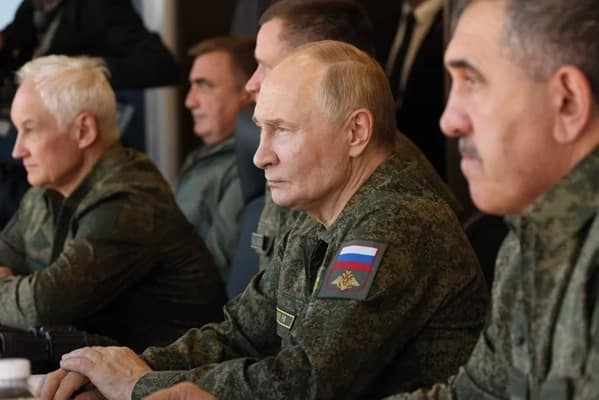
"Russian intelligence services linked to President Vladimir Putin continue to operate in the UK using a blend of traditional espionage, cyber operations, influence campaigns and criminal proxies, according to British security officials and allied intelligence assessments. While the Cold War image of spies swapping secrets in parks still exists at the margins, modern Russian espionage in Britain is broader, more adaptive and increasingly aggressive."
"Three intelligence services, one strategy Russia operates through three main intelligence bodies, each with distinct roles but a shared objective: weakening Western cohesion and advancing Moscow's strategic interests. GRU focuses on military intelligence, sabotage and covert action. SVR handles classic espionage, recruitment of assets and political intelligence. FSB oversees internal security but also runs overseas counter-intelligence and intimidation operations. UK officials say these services increasingly operate in parallel rather than isolation, coordinating cyber, human intelligence and disinformation."
"Traditionally, Russian spies in the UK operated under diplomatic cover, working from the embassy in London. Officers would pose as diplomats, trade officials or cultural attachés while running intelligence networks. That model has been severely disrupted since the 2018 Salisbury nerve-agent attack on former Russian spy Sergei Skripal, after which the UK expelled dozens of suspected intelligence officers. Further mass expulsions followed Russia's invasion of Ukraine."
Russian intelligence services linked to President Vladimir Putin employ a mix of traditional espionage, cyber operations, influence campaigns and criminal proxies to pursue strategic objectives in the UK. Three main services—GRU, SVR and FSB—focus respectively on military intelligence and covert action; classic espionage, asset recruitment and political intelligence; and internal security plus overseas counter‑intelligence and intimidation. The services increasingly operate in parallel, coordinating cyber, human intelligence and disinformation. Diplomatic expulsions after the 2018 Salisbury attack and the invasion of Ukraine reduced diplomatic cover. Moscow has shifted to non‑official cover agents and criminal intermediaries for surveillance, logistics and cyber‑crime.
Read at London Business News | Londonlovesbusiness.com
Unable to calculate read time
Collection
[
|
...
]