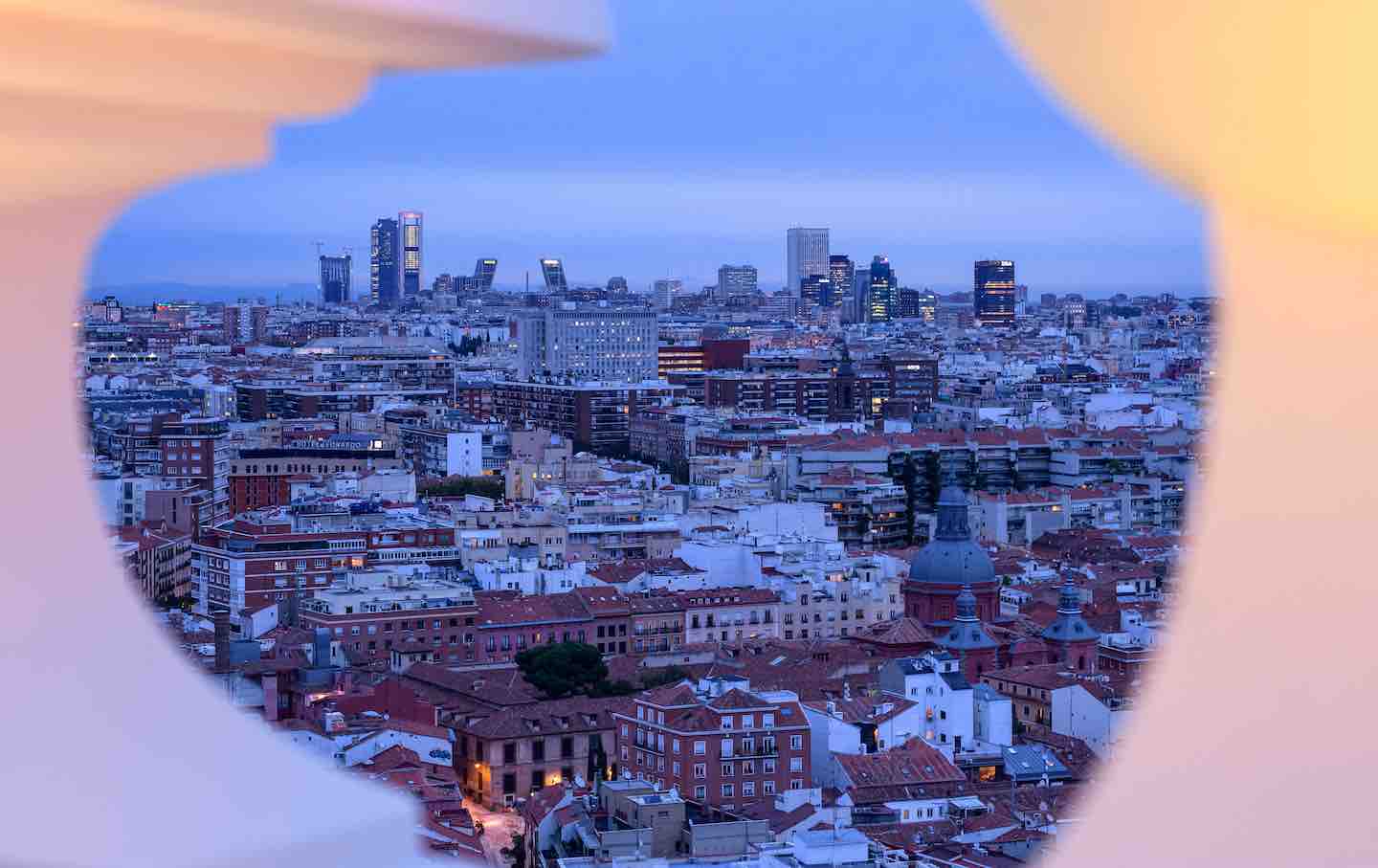
"At the end of 2024, Spain's National Institute for Statistics published a revealing figure: the number of Latin American-born residents in the Madrid region had, for the first time, surpassed 1 million-1,038,671, to be exact, or about 15 percent of the total population. Today, more Latin Americans live in Madrid than in Santiago (Cuba), Arequipa (Peru), or Valparaíso (Chile). This is all the more remarkable given that just a quarter-century ago, Madrid's Latin American-born population barely surpassed 80,000."
"For anyone who has spent time in Madrid in recent years, however, these statistics will not come as a surprise. If you wander around the city's northern district of Tetuán, near the Alvarado metro station, you'll find yourself in Little Santo Domingo, a compact arrangement of streets lined with hairdressers, grocery stands, cell phone shops, clothing stores, and restaurants catering to the neighborhood's large population of Dominicans, many of whom are already second-generation Spanish citizens. Take the metro from Alvarado some 14 stops south and you'll arrive at Puente de Vallecas, on the far side of the Manzanares River, another corner of the so-called Latin American triangle. The district, which houses tens of thousands of working-class families of Colombian, Peruvian, and Venezuelan origin, is also home to the 100-year-old football club Rayo Vallecano. Shortly after Rayo signed Colombian stars like Radamel Falcao and James Rodríguez several years ago, a wave of yellow jerseys began washing over the stands of the Vallecas soccer stadium, representing the Colombian national team colors, drowning out the red-and-white of Rayo's famous thunderbolt jersey-itself reminiscent of the Peruvian national team kit."
By the end of 2024, the Madrid region counted 1,038,671 Latin American-born residents, roughly 15 percent of the population. The Latin American-born population has grown from about 80,000 a quarter-century earlier to exceed the populations of several Latin American cities. Neighborhoods such as Tetuán and Puente de Vallecas host dense communities of Dominicans, Colombians, Peruvians, and Venezuelans. Local economies feature immigrant-run hairdressers, grocery stands, cell phone shops, clothing stores, and restaurants. Many residents are second-generation Spanish citizens. Cultural influence appears in visible expressions like the predominance of Colombian colors at the Rayo Vallecano stadium.
Read at The Nation
Unable to calculate read time
Collection
[
|
...
]