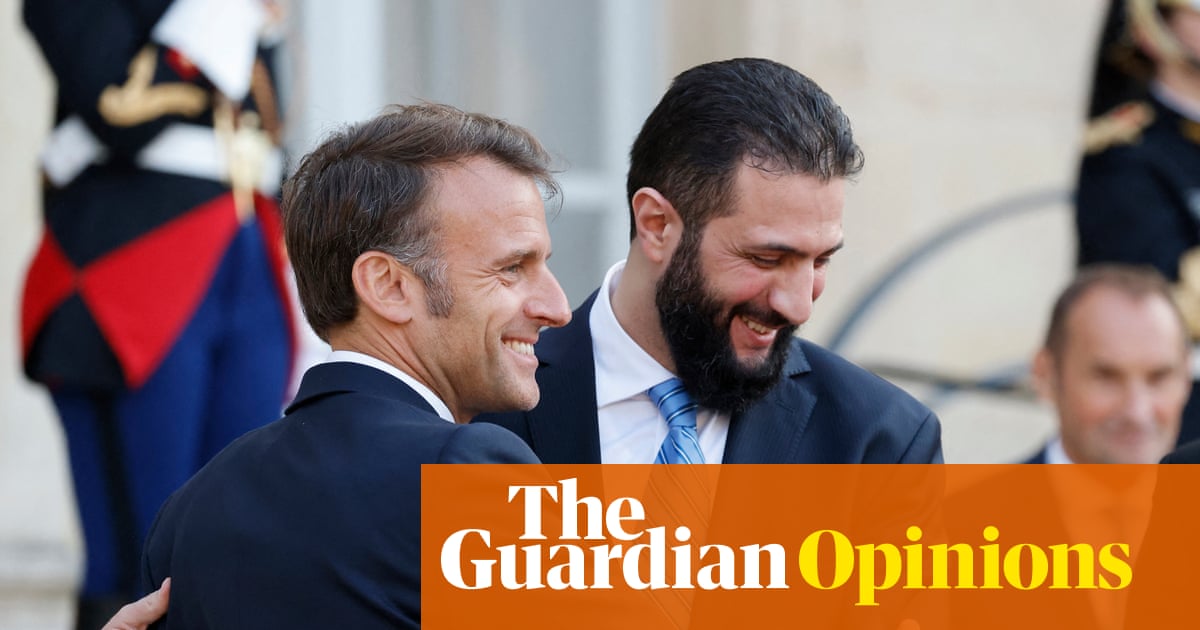
"As I listened, it struck me that, while Europe's role in the Middle East has been severely damaged by its immoral stance on the Gaza war and its self-inflicted exclusion from Iran nuclear diplomacy, Europeans still have a role to play when it comes to its neighbours in the eastern Mediterranean."
"After the Suez crisis in 1956, which marked the end of European colonial dominance in the Middle East, Europeans resigned themselves to playing second fiddle to the US. Yet, Washington called the shots, and European governments and public opinion did not always agree most notably during the 2003 Iraq war. Still, the US usually invited Europe to support its initiatives and, ultimately, Europe would comply. The social contract underpinning the transatlantic relationship, with Europe sheltered under the US security umbrella, made the bargain worthwhile."
Ahmed al-Sharaa, a former jihadi fighter turned Syrian president, spoke at the Doha Forum about his country's transition toward a participatory, rules-based system. Europe's role in the Middle East has been severely damaged by its stance on the Gaza war and its exclusion from Iran nuclear diplomacy, yet Europe retains potential influence in the eastern Mediterranean. US alignment with Moscow over Ukraine and a transatlantic rift under the Trump administration have undermined European standing. Since the 1956 Suez crisis Europe has generally played second fiddle to the United States, though Europeans exercised agency in the Oslo peace process and in supporting multilateral diplomacy leading to the Iran nuclear deal.
#europe-middle-east-relations #transatlantic-relations #iran-nuclear-diplomacy #eastern-mediterranean-geopolitics
Read at www.theguardian.com
Unable to calculate read time
Collection
[
|
...
]