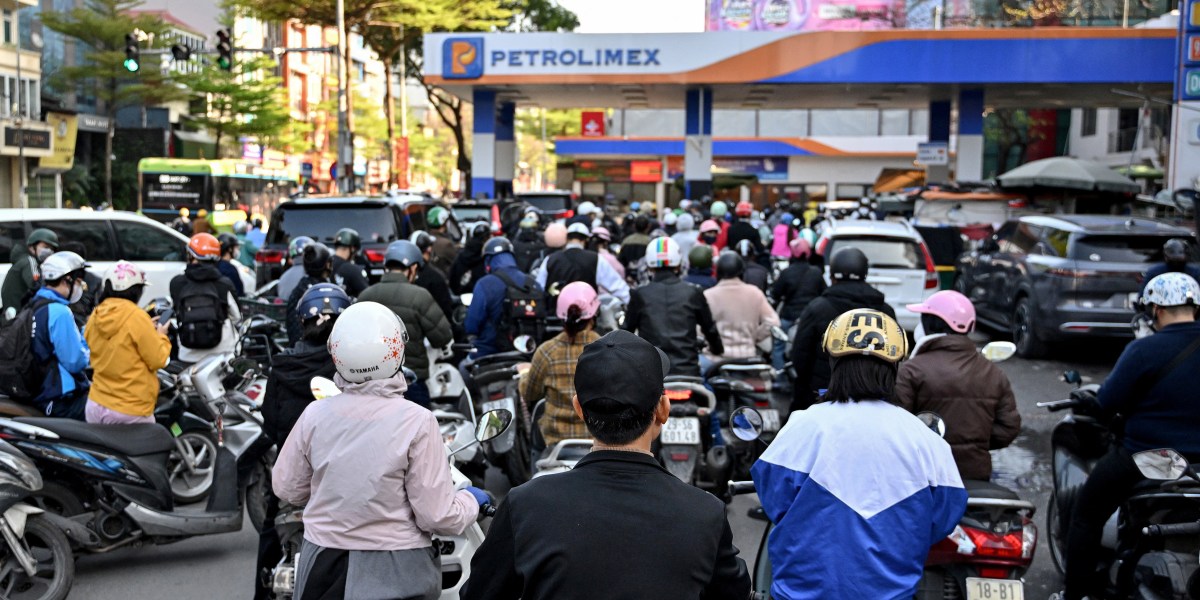
"Asia is particularly dependent on oil exports from the Middle East; Japan and South Korea respectively source 90% and 70% of their oil from the region. The energy crunch is forcing governments to adopt more extreme measures to save fuel. On March 10, Thailand ordered civil servants to take the stairs rather than the elevator, and to work-from-home for the duration of the crisis."
"Vietnam also called on businesses to let people work-from-home to 'reduce the need for travel and transportation.' The Philippines is pushing for a four-day work week, and has ordered officials to limit travel 'to essential functions only.' South Asia is getting hit hard too. Bangladesh brought forward the Eid-al-fitr holiday, allowing universities to close early in a bid to save fuel."
"South Korean President Lee Jae Myung on Monday said the country would introduce a price cap on petroleum products, and warned that the current crisis presented a 'significant burden on the country's economy.' Around 1.7 million barrels of Korea-bound oil has been held back per day due to the ongoing conflict, presidential policy advisor Kim Yong-beom noted during a March 9 press briefing."
Asia faces severe fuel shortages caused by high oil prices and closure of the Strait of Hormuz, with countries heavily dependent on Middle Eastern oil exports. Japan and South Korea source 90% and 70% of their oil from the region respectively. Governments are adopting extreme conservation measures: Thailand mandates stairs over elevators, increased air-conditioning temperatures, and work-from-home policies. Vietnam, Philippines, Bangladesh, and Pakistan implement similar measures including four-day work weeks, school closures, and holiday acceleration. India prioritizes household gas supplies over commercial operators. South Korea introduces petroleum price caps while Japan's industry minister addresses the crisis. These interventions reflect the economic threat posed by the energy shortage.
Read at Fortune
Unable to calculate read time
Collection
[
|
...
]