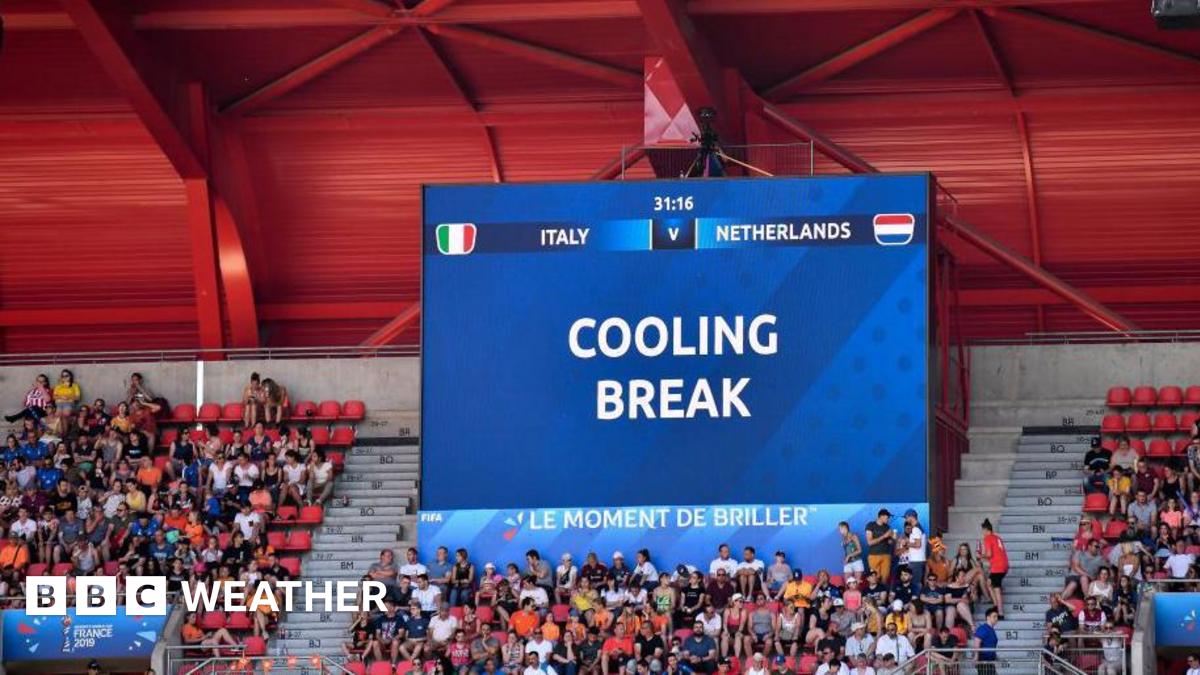
"Heat, thunderstorms and even poor air quality from wildfires are all features of summer across the United States, Canada and Mexico, where the tournament will be held. Humidity may also be a key factor in any disruption to the World Cup caused by the weather. Fifa has acknowledged that hot weather could be an issue and, as part of its "commitment to player welfare", has introduced mandatory three-minute cooling breaks in each half of every match for the tournament."
"During the Fifa Club World Cup last year, six football matches were disrupted by heat and thunderstorms, including a two-hour delay during a match between Chelsea and Benfica. It prompted Enzo Maresca, the Chelsea manager at the time, to say the US is "probably not the right place to do the competition". Many of the host cities are accustomed to high summer temperatures."
"In parts of the southern United States and northern Mexico, average daytime highs are typically in the low to mid-30s C (mid 90F) and can rise towards 40C (104F) during hotter spells. When you add humidity into the equation, making it more difficult for the body to cool itself effectively, things start to feel hotter still. There are two heat indexes you will get to hear a lot about this summer."
"One is the 'feels like', which is how your body feels the heat rather than what the thermometer says. In Miami, for example, a typical air temperature of 32C (90F) in summer would regularly feel like 43C (109F). There is also the Wet Bulb Globe Temperature (WBGT), which assesses physical heat stress on the body. A WBGT of around 28C (82F) is widely considered a threshold at which heat stress becomes a significant concern for elite athletes."
Heat, thunderstorms, and wildfire-related poor air quality are expected across the United States, Canada, and Mexico during the tournament. Humidity may increase disruption risk by making it harder for the body to cool itself. FIFA has introduced mandatory three-minute cooling breaks in each half to support player welfare. Past events show weather can delay matches, including a two-hour delay during a Club World Cup match. Host cities often experience summer highs in the low to mid-30s C, with hotter spells near 40C. Heat stress is assessed using “feels like” temperatures and Wet Bulb Globe Temperature (WBGT), with WBGT around 28C commonly treated as a threshold for significant concern for elite athletes.
Read at www.bbc.com
Unable to calculate read time
Collection
[
|
...
]