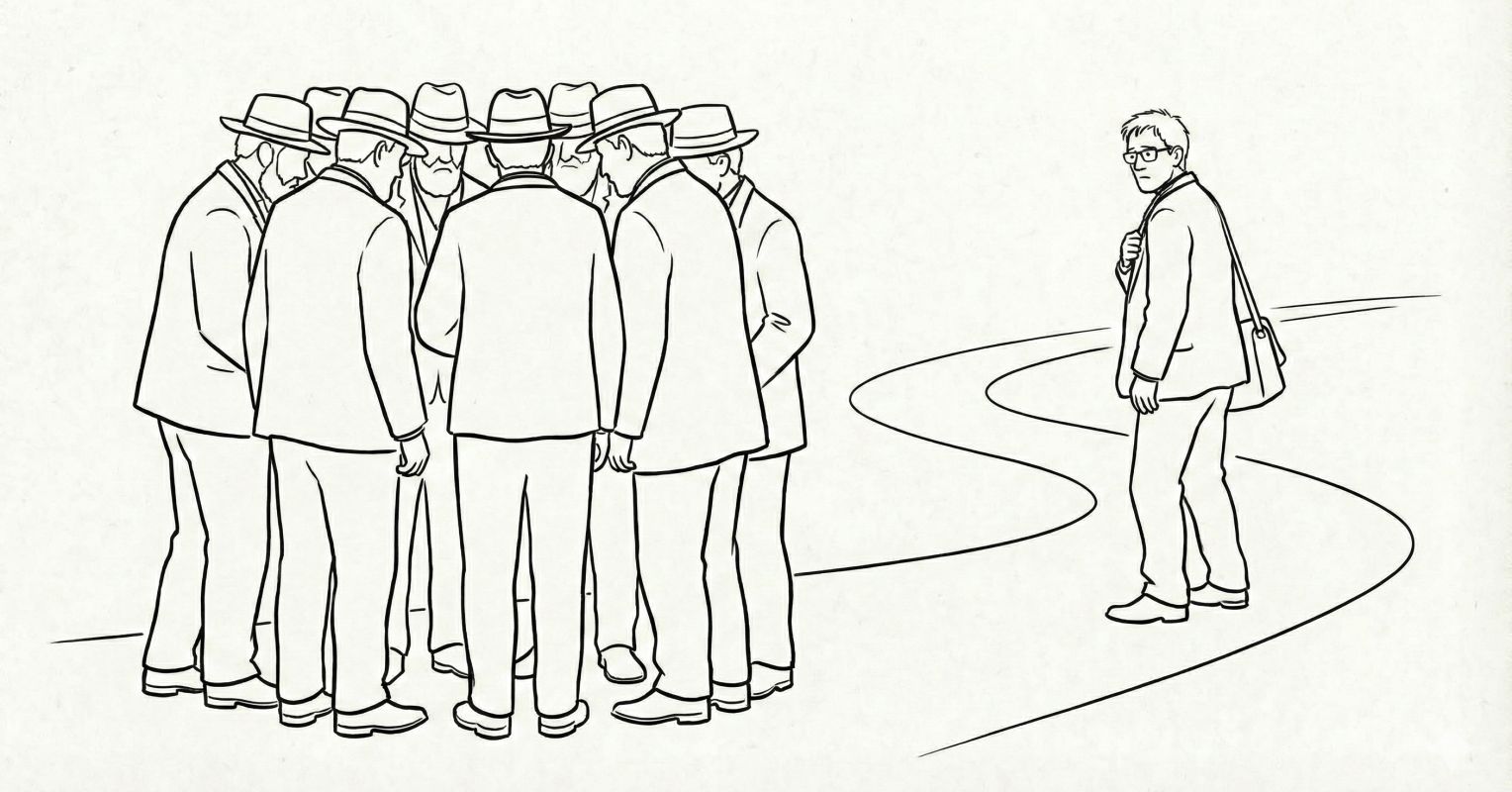
"When Zalman Newfield stood in a Brooklyn post office at 15, unable to sign his own name in English, the postal worker's impatience was the least of his problems. The real crisis wasn't illiteracy-it was identity. For anyone raised in a high-demand religious community, the boundary between self and sect dissolves so completely that leaving isn't just a change of address or belief system. It's a kind of psychological death and rebirth."
"Born into Brooklyn's Lubavitch Hasidic community in 1982, Newfield grew up believing his spiritual leader was the messiah. His yeshiva included no secular education whatsoever. The outside world, he was told, was "like a pit devoid of water but full of snakes and scorpions." His identity was completely absorbed; he was a "foot soldier" in the Rebbe's army. And then, gradually, he wasn't."
A 15-year-old in a Brooklyn post office could not sign his name in English, revealing an identity crisis rather than illiteracy. High-demand religious communities often control information and suppress questioning, producing closed systems where the boundary between self and sect dissolves. Leaving such communities entails losing the interpretive framework that organized thought and daily life, producing psychological death and rebirth. Research on deconversion shows common stages but often omits the intense existential dizziness of losing a worldview. Social ostracism after departure activates neural pathways associated with physical pain, and recovery requires rebuilding identity and finding secular education and social support.
Read at Psychology Today
Unable to calculate read time
Collection
[
|
...
]