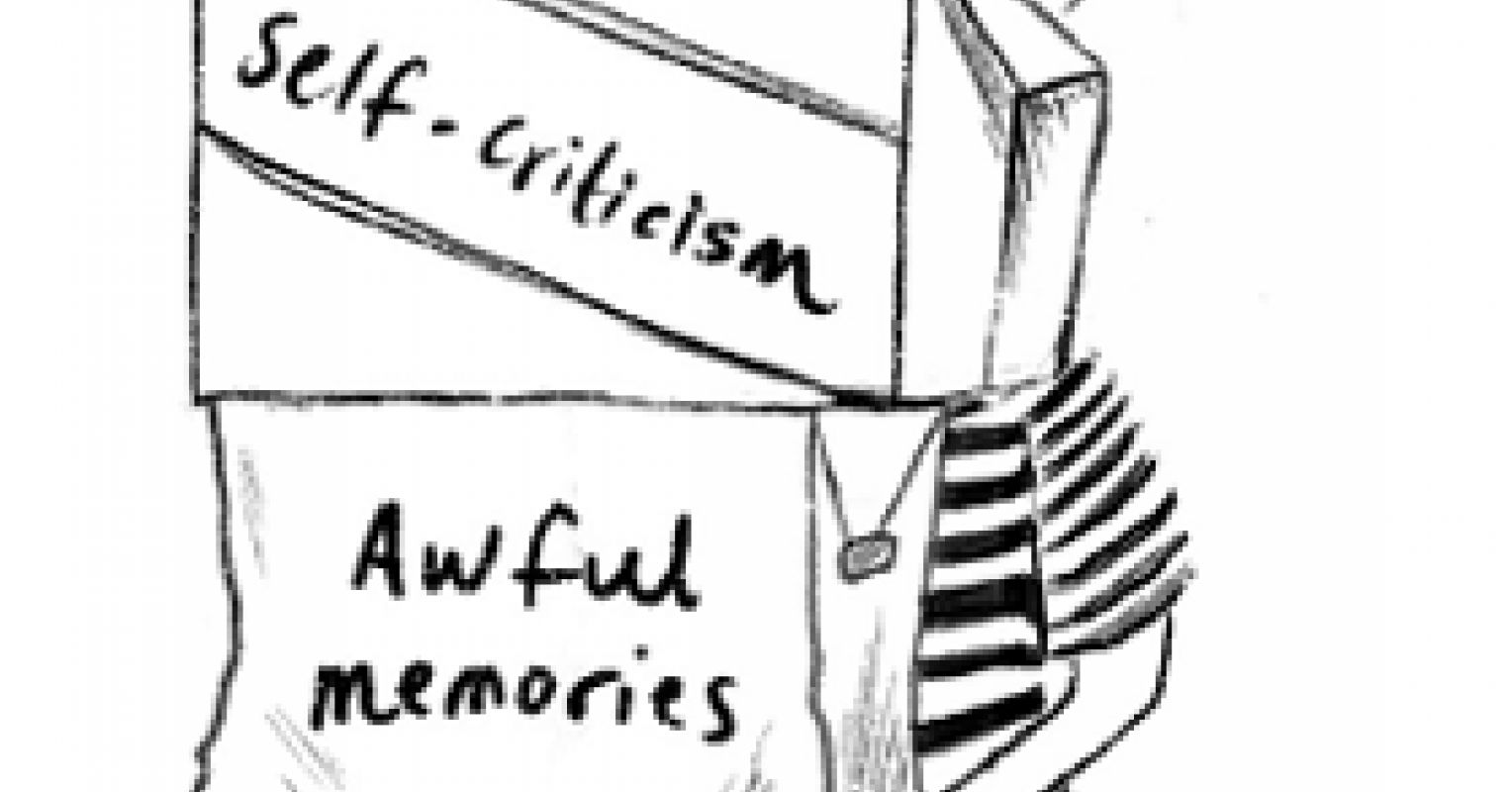
"Have you ever felt worried? And someone said, "Don't worry about it"? Did that help? Have you ever felt sad? And someone said, "Cheer up"? Did you cheer up? If your answers were yes, yes, no-and yes, yes, no-then congratulations. You're struggling with what we call in the psychology biz, being a human being. Like every human I've ever met, you sometimes feel emotions that hurt. You probably also wrestle with cruel or critical thoughts. That's not a flaw, it's part of the deal."
"Welcome to Holding the Heavy Stuff: Life Is Hard and You've Got This. Here, we'll explore how we're set up to feel like failures just for being human. We'll look at what happens when we pour our energy into trying to eliminate thoughts and feelings that are meant to be there, and what changes when we stop fighting them. We'll practise making space for whatever shows up inside us, and learn how to spend our limited time and energy moving toward the people, values, and ideas that matter most."
Humans commonly experience painful emotions and self-critical thoughts. Feeling sadness or worry does not indicate personal failure. Cultural pressures often shame normal emotions and promote unrealistic constant positivity. Real-world problems such as war, inequality, rising costs, and threats to well-being create genuine reasons for distress. Attempting to eliminate unwanted thoughts and feelings consumes energy and deepens struggle. Making space for emotions through acceptance reduces struggle and preserves energy. Redirecting that energy toward valued people, relationships, and ideas produces more meaningful action. Including oneself among those who matter supports sustainable care and engagement. Strategies derive from Acceptance and Commitment Therapy.
Read at Psychology Today
Unable to calculate read time
Collection
[
|
...
]