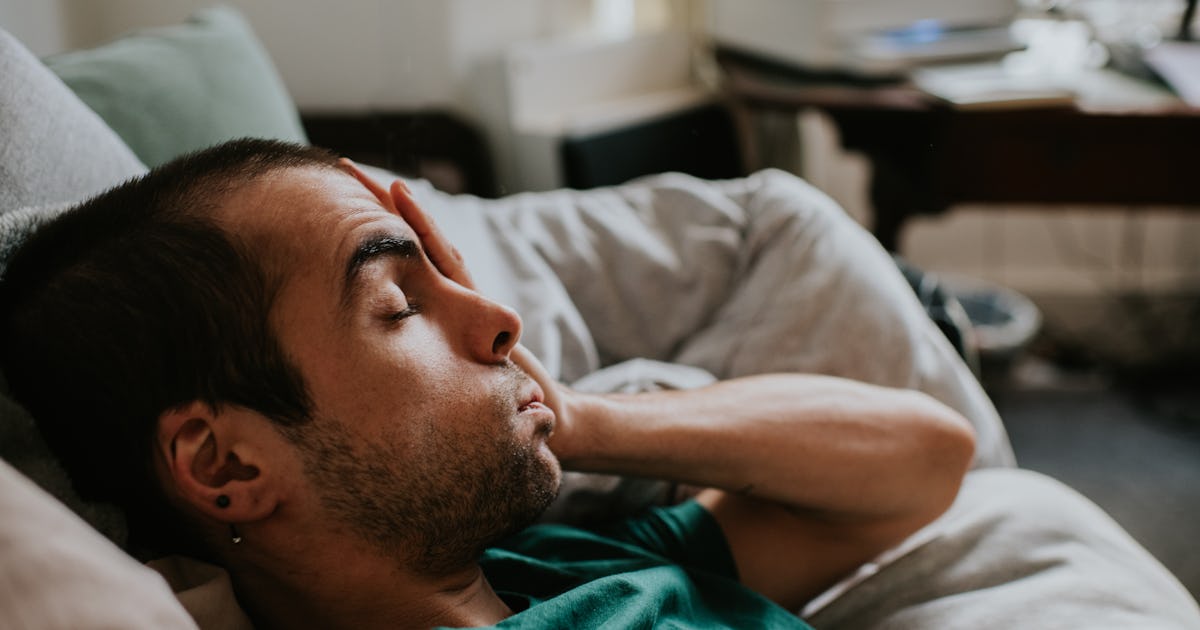
"At its core, "sleep apnea refers to a stoppage of breathing during sleep - reduced or no breathing for 10 seconds or longer," says Jordan Weiner, MD, a board-certified otolaryngologist and president of Valley ENT in Scottsdale, Arizona. Those pauses can happen dozens of times throughout the night, often without the sleeper having any memory of them."
"Even though these breathing interruptions happen quietly, their effects don't stay confined to the night. Over time, untreated sleep apnea can ripple through the body, affecting everything from heart health and stress hormones to mood, memory, and focus the next day. Here's what's actually going on - physically, emotionally, and cognitively - when sleep apnea flies under the radar."
"If you share a bed with a partner, this is usually the part where they chime in. Maybe you've been told you snore. Perhaps you've been nudged, elbowed, or (gently) kicked in the middle of the night. Snoring happens when airflow is partially blocked and relaxed tissues in the back of the throat vibrate as you breathe - air is still moving, just noisily."
Sleep apnea involves reduced or stopped breathing for at least 10 seconds during sleep, and episodes can occur dozens of times per night without conscious memory. Moderate to severe obstructive sleep apnea is more common in men, affecting roughly two to three times as many men as women in middle age, with hormones, fat distribution, and airway anatomy contributing. Even quiet breathing interruptions produce downstream effects on cardiovascular health, stress-hormone regulation, mood, memory, and daytime focus. Snoring results from partially blocked airflow and vibrating throat tissues and can coexist with or occur without sleep apnea, so snoring alone does not confirm apnea.
Read at Inverse
Unable to calculate read time
Collection
[
|
...
]