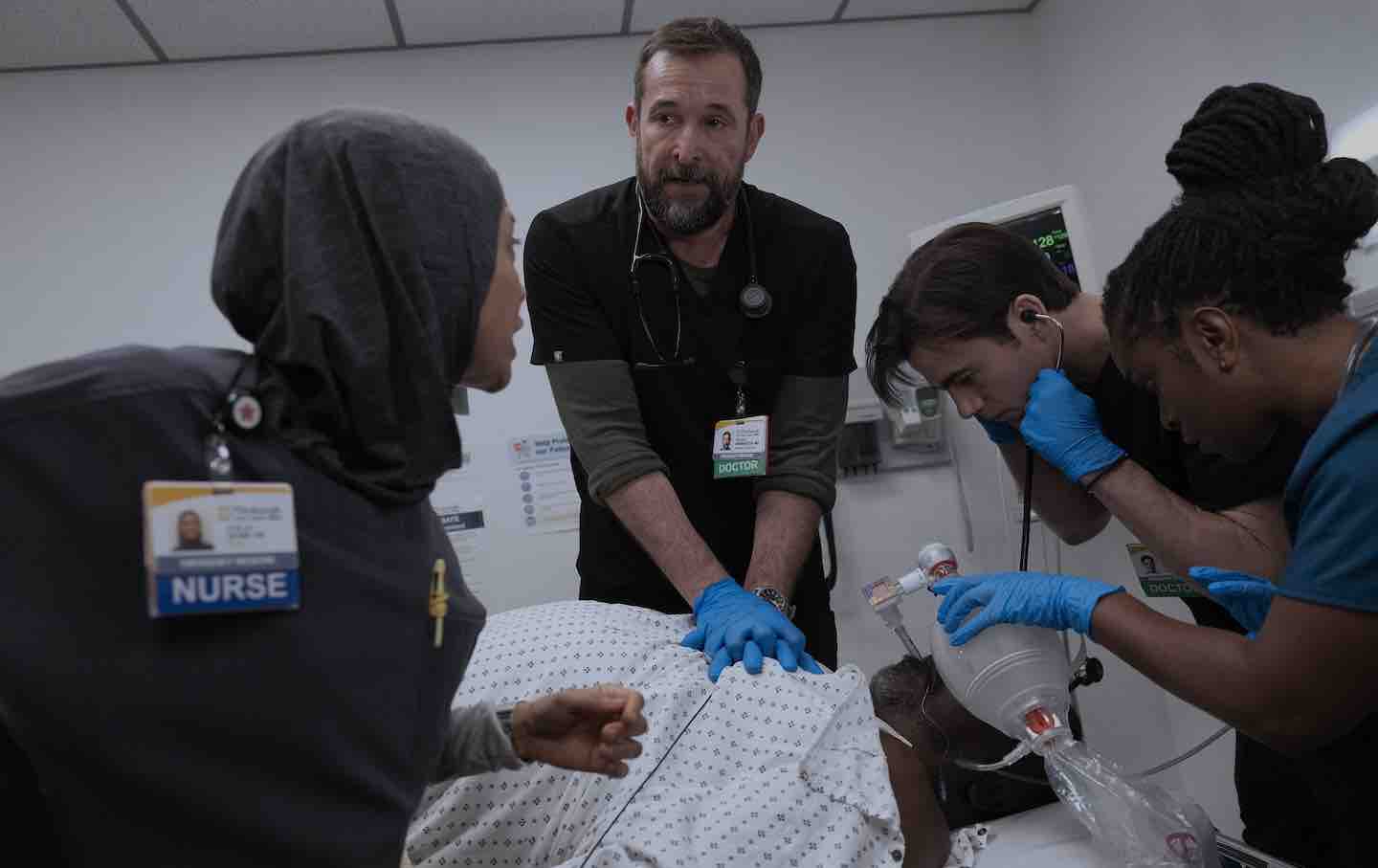
"(Warrick Page / HBO Max) Ispent much of the final year of my internal medicine residency in a windowless workroom on the seventh floor of a hospital in Boston. The desks were sticky from spilled diet ginger ale. There were vulgar inside jokes scribbled on the dry-erase board near the entryway. There was cheap champagne in the mini fridge for mimosas we'd mix at the end of a string of night shifts."
"But verisimilitude wasn't what made it novel; it captured something that once felt more private. The Pitt found a way to make evident the disquieting feeling of intubating a dying patient because a family member couldn't let go. Then the sounds: the beeps of monitors that fade into a kind of white noise, the suctioning of secretions from a patient's airway, a gurgling that always made my stomach turn."
Residency nights unfolded in a cramped, windowless workroom with sticky desks, crude jokes on a dry-erase board, and a mini fridge kept for mimosas after long shifts. Supplies like epinephrine and large needles were hoarded and carried to emergent calls. Colleagues watched a medical drama called The Pitt while on duty; reactions varied but clinicians agreed on its clinical accuracy. The show rendered visceral clinical moments—the act of intubating, the beeps and suctioning and the stomach-turning gurgle—and paired them with quiet tenderness when patients begin to trust, laugh, or reflect the caregiver. The show also foregrounded social issues like racial disparities in Child Protective Services involvement and hospital boarding crises.
Read at The Nation
Unable to calculate read time
Collection
[
|
...
]