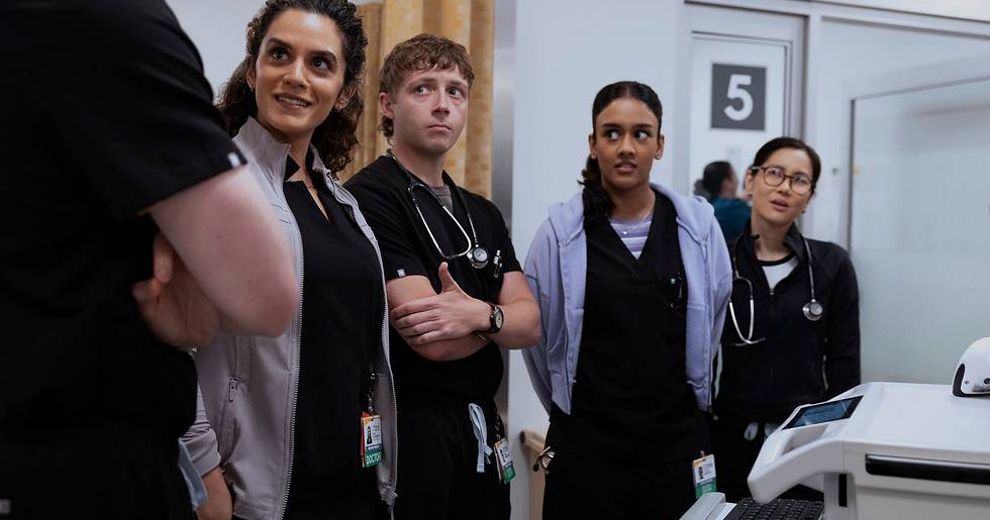
"Dr. Al-Hashimi has only grown more comfortable throughout the first hour; not only is she hovering, but she's making calls in trauma rooms that directly undercut Robby, even though, thus far, Robby's directives for his doctors have been the correct ones. And could Dr. Al roll her eyes any harder when multiple residents come to Robby with Robby-approved "gut feelings"? For Dr. Al, gut feelings drool, and algorithms and protocols rule, you know what I mean?"
"There are two main moments in "8:00 AM" in which their particular brands of doctoring are at odds. One is when they need baby Jane Doe to pee, and Al-Hashimi wants to place a catheter, while Robby thinks that's an extreme first step. He has a little cold water on a cotton swab trick that does, in fact, lead to some pee in a cup, so there."
"The second head-to-head is even more testy. Barry comes in with an upper airway obstruction after eating breakfast. The regular ol' heimlich didn't work and all the docs involved know they'll have to get a look inside Barry's esophagus. Dr. Al-Hashimi wants to sedate Barry with ketamine and rocuronium in case this isn't just a piece of food stuck in his throat and they need to intubate quickly."
Two emergency medicine attendings clash over clinical judgment and protocol during a busy morning shift. Dr. Al-Hashimi favors algorithms, protocols, and earlier invasive interventions, frequently making calls that undercut the long-standing attending, Robby. Robby relies on experience, pragmatic approaches, and less invasive maneuvers. Two specific disputes escalate: whether to catheterize baby Jane Doe versus using a cold-water swab to elicit urination, and whether to sedate Barry with ketamine alone or add rocuronium in anticipation of a difficult airway. Team dynamics and loyalty amplify interpersonal friction as differing risk tolerances and leadership styles collide during acute care.
Read at Vulture
Unable to calculate read time
Collection
[
|
...
]