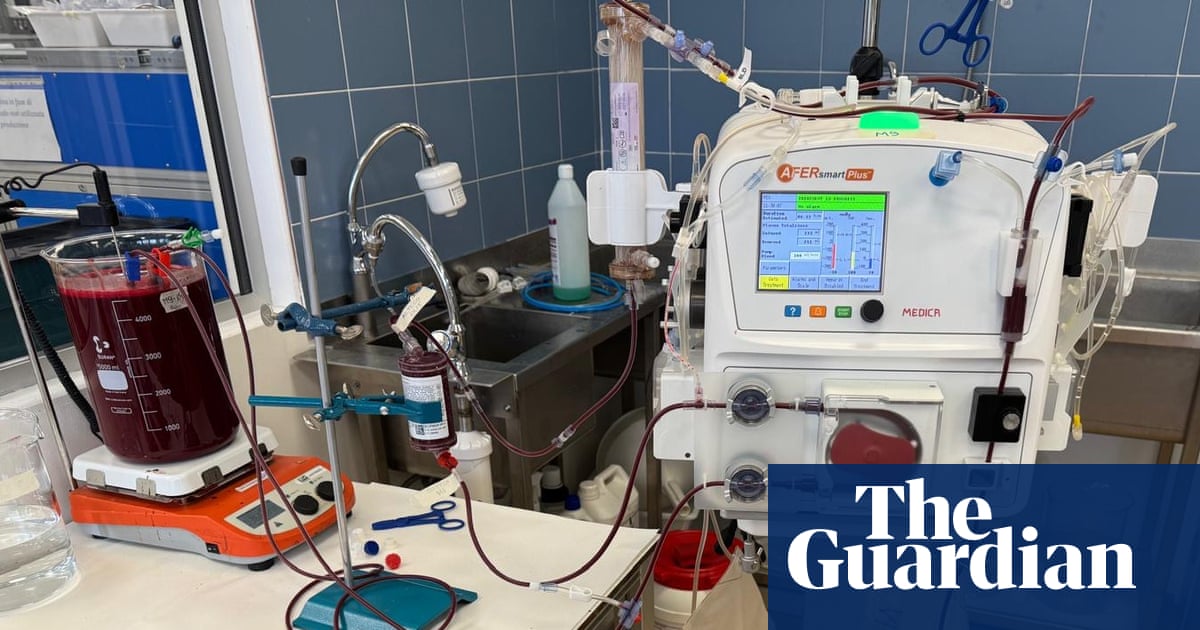
"Thirteen major hospitals will use a device that cleans patients' blood that has become corrupted by toxins as a result of them developing acute-on-chronic liver failure (ACLF). ACLF is a severe and hard-to-treat form of liver disease linked to obesity, alcohol and hepatitis, in which patients suddenly deteriorate and have to be admitted to intensive care. Three out of four people affected are only diagnosed when it has already become life-threatening."
"Dialive seeks to aid recovery by removing dysfunctional albumin a protein produced by the liver and replacing it with clean, functional albumin. The intensive care liver support system works in a similar way to what happens during haemodialysis, a long-established treatment for people whose kidneys have stopped working properly. dialysis graphic Patients are hooked up to the Dialive device while it removes harmful substances from their blood, which helps their liver and other organs to recover and increases their chances of survival."
Thirteen major hospitals will enrol 72 seriously ill patients in a randomised controlled trial of Dialive to treat acute-on-chronic liver failure (ACLF). ACLF causes sudden deterioration, multiple organ failures, and high short-term mortality, with seven in ten patients dying within 28 days and few eligible for transplant. Dialive removes dysfunctional albumin and replaces it with clean, functional albumin, operating similarly to haemodialysis. Participants will receive treatments on days one, two and three and up to four additional sessions within ten days. Successful results could establish a new form of liver dialysis.
Read at www.theguardian.com
Unable to calculate read time
Collection
[
|
...
]