"With the help of artificial intelligence, machine language, algorithms, and a wealth of technology, neuroscience is bringing us closer to the day when people with spinal cord injuries can walk; when people with Parkinson's disease no longer experience mental freezes; when those who have lost sensation can feel touch again; or when those who have lost their sight can once more perceive light."
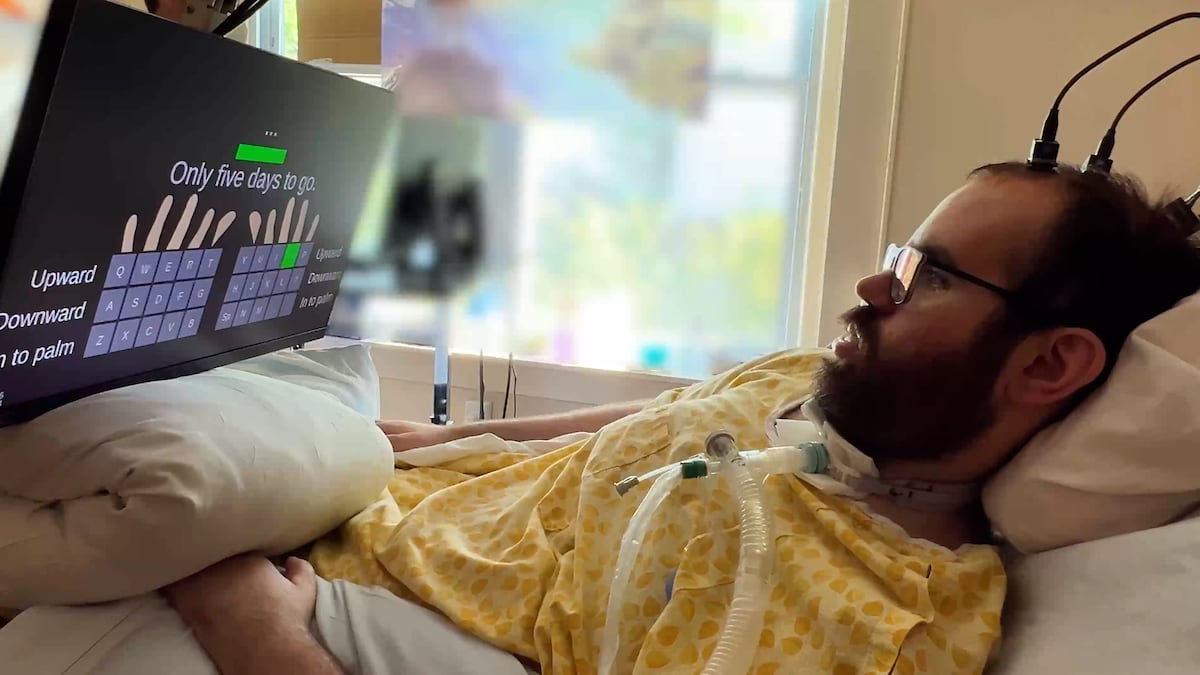
"At one end of the BCI are small plates with hundreds of microelectrodes placed directly on the brain. But not just anywhere; they're placed in areas of the motor cortex that previous research has identified as responsible for fine finger movements. At the other end, there's a screen displaying a QWERTY keyboard."
"The machine learning algorithm then learns which patterns of neural activity [recorded] at the electrodes correspond to each of the 30 possible finger movements. The English-language QWERTY keyboard has 26 letters. The other four movements were for the period, comma, question mark, and space bar."
Neuroscience is advancing toward restoring capabilities for people with severe disabilities through brain-machine interfaces (BCI). American neuroscientists developed a BCI system that enables communication through thought-controlled typing. Microelectrodes placed in the motor cortex areas responsible for finger movements record neural activity. A machine learning algorithm learns the neural patterns corresponding to 30 possible finger movements, including letters and punctuation. During calibration, participants type predefined sentences to train the system. Two paralyzed patients successfully tested the interface, achieving high-speed typing with near-perfect accuracy. This breakthrough represents significant progress toward restoring communication and independence for people with paralysis.
#brain-machine-interface #neural-technology #paralysis-treatment #machine-learning #neuroscience-innovation
Read at english.elpais.com
Unable to calculate read time
Collection
[
|
...
]