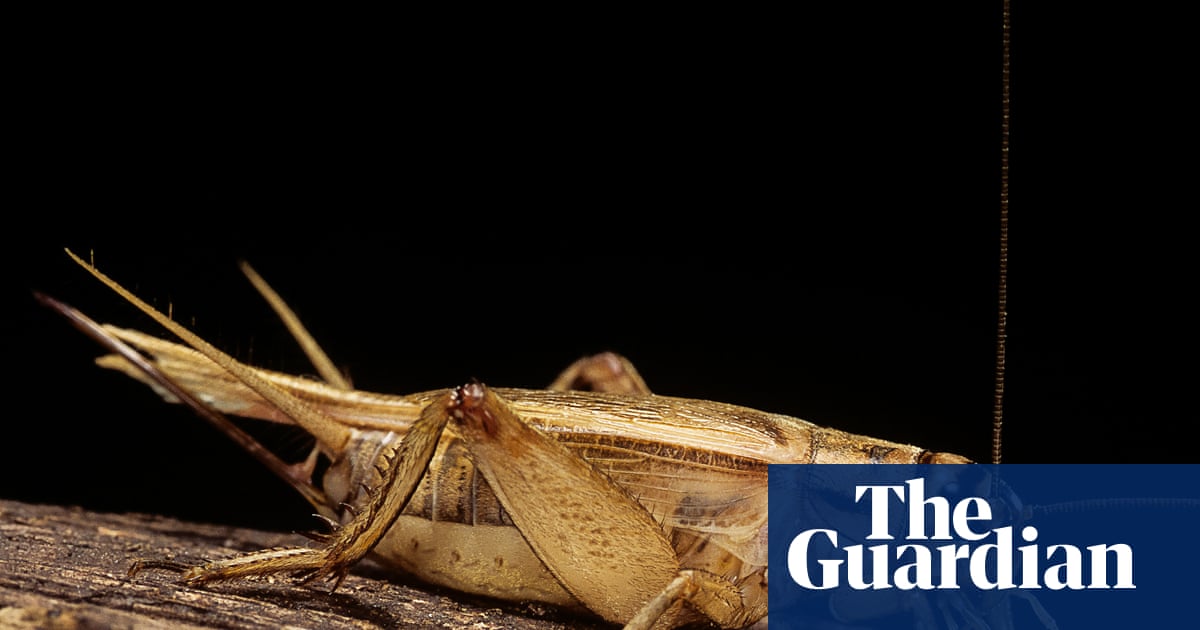
"Crickets certainly seem to, according to new research which finds they stroke and groom a sore antenna in much the same way as a dog nurses its hurt paw. Associate Prof Thomas White, an entomologist from the University of Sydney, said the experience of pain was a longer, drawn-out, ouchy feeling, that differed from a hardwired nerve response. But evidence for pain is difficult to establish in other species, he says, so scientists look for behavioural cues."
"One indicator is flexible self-protection, where an animal directs protection to a particular body part over an extended period of time. You see a dog, limping, or licking its paw, or holding one particular arm of course, we'd immediately say, well that's in pain, it must be sore. Scientists search for evidence of similar responses to ascribe pain to other animals, including insects. So, to test the idea in crickets, researchers first had to give them an ouchy."
"In the study, published in Proceedings of the Royal Society, dozens of crickets were randomly selected to receive one of three treatments. Some had a heated soldering iron applied to one antenna, while other crickets received the same probe; unheated, and a third acted as a control. The soldering iron was set to 65C hot enough to be a bit unpleasant, without causing lasting harm, White says."
"Crickets that received the hot probe overwhelmingly directed their attention to the affected antenna they groomed it more frequently, and tended to it over a longer period of time, he says. They weren't just agitated and flustered. They were directing their attention to the actual antennae that was hit with this hot probe. The other crickets? They were a bit perturbed, he says, but resumed normal activity very, very quickly."
Crickets exposed to heat on an antenna show targeted, prolonged protective behavior. Researchers applied a heated probe to one antenna of crickets and compared it with an unheated probe and a control condition. Crickets receiving the hot probe groomed the affected antenna more frequently and tended to it over a longer period. They were not merely agitated; they directed attention specifically to the antenna that was heated. Crickets receiving the unheated probe or control treatment showed only brief disturbance and returned to normal activity quickly. Pain evidence is difficult to establish directly in many species, so scientists rely on behavioral cues such as flexible self-protection directed at a particular body part over time.
Read at www.theguardian.com
Unable to calculate read time
Collection
[
|
...
]