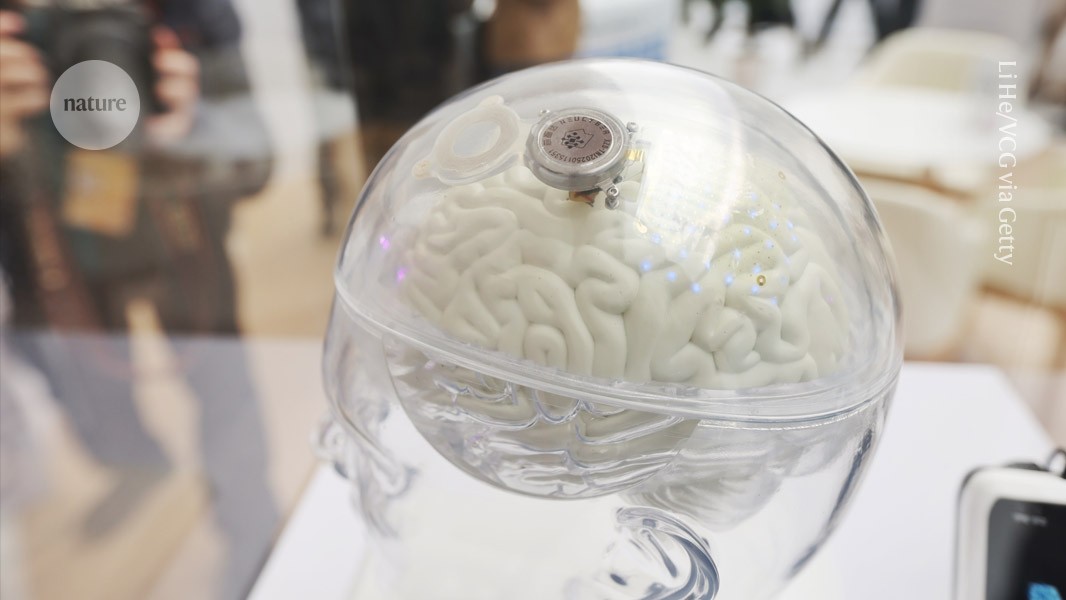
"BCI technology is important because there are no effective ways to treat people who have spinal-cord injuries, says Chen Liang, a neurosurgeon at Huashan Hospital at Fudan University in Shanghai, who was involved in the clinical trials of the device, called NEO."
"The research team behind the device has up to 18 months of data showing that the BCI system works. 'That kind of long-term evidence is rare in this field, and I think that's a key reason why this approval was possible,' Liu adds."
"The coin-sized NEO is embedded in the skull, with eight electrodes placed over one side of the brain to record electrical activity when the person imagines moving their opposite hand. The signals are sent to a computer to be decoded and then used to control a glove."
China's National Medical Products Administration approved NEO, a brain-computer interface developed by Neuracle Medical Technology, marking the first BCI available for broader use beyond clinical trials. The device targets people aged 18-60 with severe paralysis affecting all limbs due to spinal cord neck injuries. NEO is a coin-sized implant with eight electrodes that record brain electrical activity when patients imagine moving their hand, converting these signals into commands to control a robotic glove. The approval represents a significant milestone for BCI research, supported by 18 months of long-term clinical data demonstrating the system's effectiveness. This advancement addresses the lack of effective treatments for spinal cord injuries and follows similar developments by other companies like Paradromics and Neuralink in restoring communication and motor function.
#brain-computer-interface #spinal-cord-injury-treatment #medical-device-approval #neural-implant-technology #motor-function-restoration
Read at Nature
Unable to calculate read time
Collection
[
|
...
]