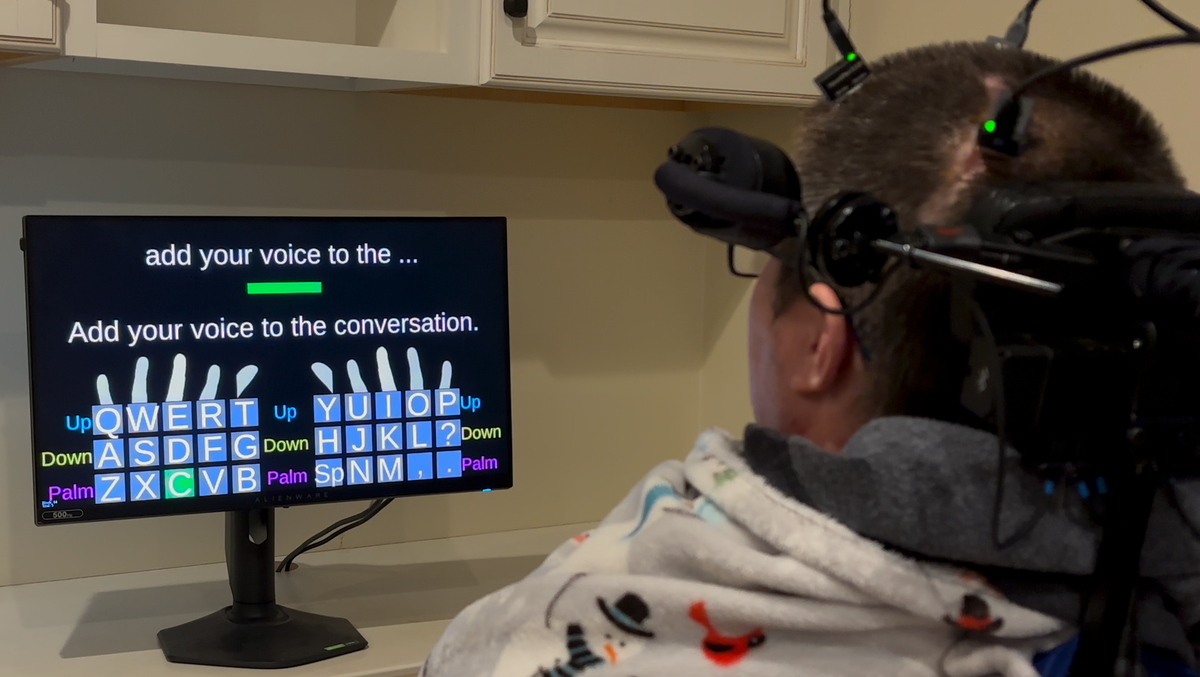
Brain-computer interfaces (BCIs) are devices with implanted electrode chips that decode neural electrical signals to enable communication for people with near-total paralysis. Historically, BCIs allowed typing through virtual keyboards but at frustratingly slow speeds. Recent research published in Nature Neuroscience demonstrates that a new BCI system helped two paralyzed individuals type at speeds up to 22 words per minute, nearly matching average smartphone texting speeds. This represents a significant technical advancement, bringing neural typing capabilities much closer to practical communication speeds for people with paralysis. BCI technology has evolved substantially since the 1960s, progressing from single-electrode monkey brain recordings to sophisticated systems enabling cursor control and prosthetic hand operation.
"Now, however, a team of scientists report that their BCI keyboard helped two people with paralysis type at speeds of up to 22 words per minutenearly as fast as the average person can text using a smartphone. The findings were published today in Nature Neuroscience."
"This is an important technical advance that brings brain-computer typing much closer to practical communication speeds for people with paralysis, says Edward Chang, a professor of neurological surgery at the University of California, San Francisco, who was not involved in the study."
"At about 22 words per minute, this is among the fastest motor-cortex typing BCIs yet and dramatically faster than most earlier neural spellers, says Chang, who has worked on another speech-decoding BCI."
#brain-computer-interfaces #paralysis-communication #neural-decoding #assistive-technology #neuroscience-advancement
Read at www.scientificamerican.com
Unable to calculate read time
Collection
[
|
...
]