"An international trial is examining whether a finger-prick blood test could be used to help diagnose Alzheimer's disease. The study, involving 1,000 volunteers aged over 60 in the UK, US and Canada, will aim to detect biomarkers associated with the condition. Dr Michael Sandberg, a London GP, was encouraged to take part in the study after witnessing his mother's slow decline from Alzheimer's disease. He had a negative result from the tests and said it was "a huge relief"."
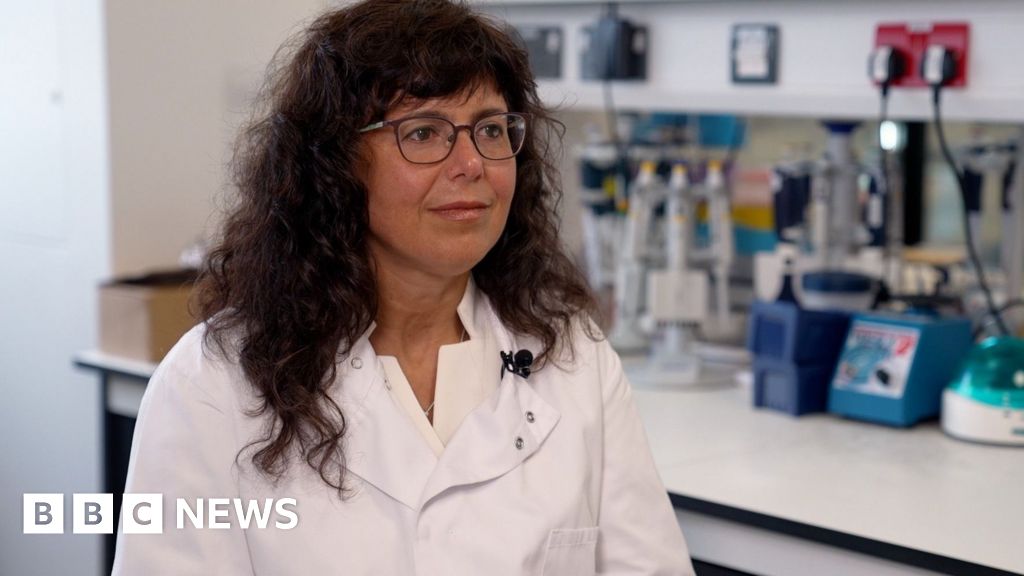
"The Bio-Hermes-002 study is led by the medical research charity LifeArc and the Global Alzheimer's Platform Foundation, with support from the UK Dementia Research Institute. Dr Giovanna Lalli, director of strategy and operations at LifeArc, said: "We are looking at the presence of three proteins that have been linked to Alzheimer's disease, so-called blood-based biomarkers. "By analysing the concentration and the levels of these proteins it may tell us whether a person is at risk of developing Alzheimer's disease." Studies have shown that rogue proteins called amyloid and tau can accumulate in the brains of individuals over 15 years before they start to display symptoms of Alzheimer's, the most common form of dementia."
An international trial will assess whether a finger-prick blood test can detect biomarkers linked to Alzheimer's disease in 1,000 volunteers aged over 60 across the UK, US and Canada. The study will measure three blood-based proteins to determine risk of developing Alzheimer's. Volunteers will also receive current gold-standard tests: specialised brain PET scans or lumbar punctures for cerebrospinal fluid. Rogue proteins amyloid and tau can accumulate up to 15 years before symptoms appear. The trial is led by LifeArc and the Global Alzheimer's Platform Foundation with UK Dementia Research Institute support, aiming to improve early, accessible diagnosis.
Read at www.bbc.com
Unable to calculate read time
Collection
[
|
...
]