"Is there excessive force? Some will say, yes. I'm not quite there, but I can see that there could be. It's a subjective judgment. But, I'm absolutely aligned that once that decision is taken on the field, we leave it as referee's call and we don't intervene with the VAR."
"I think it's one where the referee's call should stand on the field. That's what we've said we'll do where there's a mix of considerations. At full speed, when you play it in real time, you can see there's not a great deal of speed in the action, not a lot of intensity."
"We were heavily criticised a few years ago for using slow motion and freeze frames because people said, this is not reality. It's not how the game is played. When you slow it down, it can look a lot worse -- and it does. When you freeze frame it, you can make a lot of situations look like red card offences."
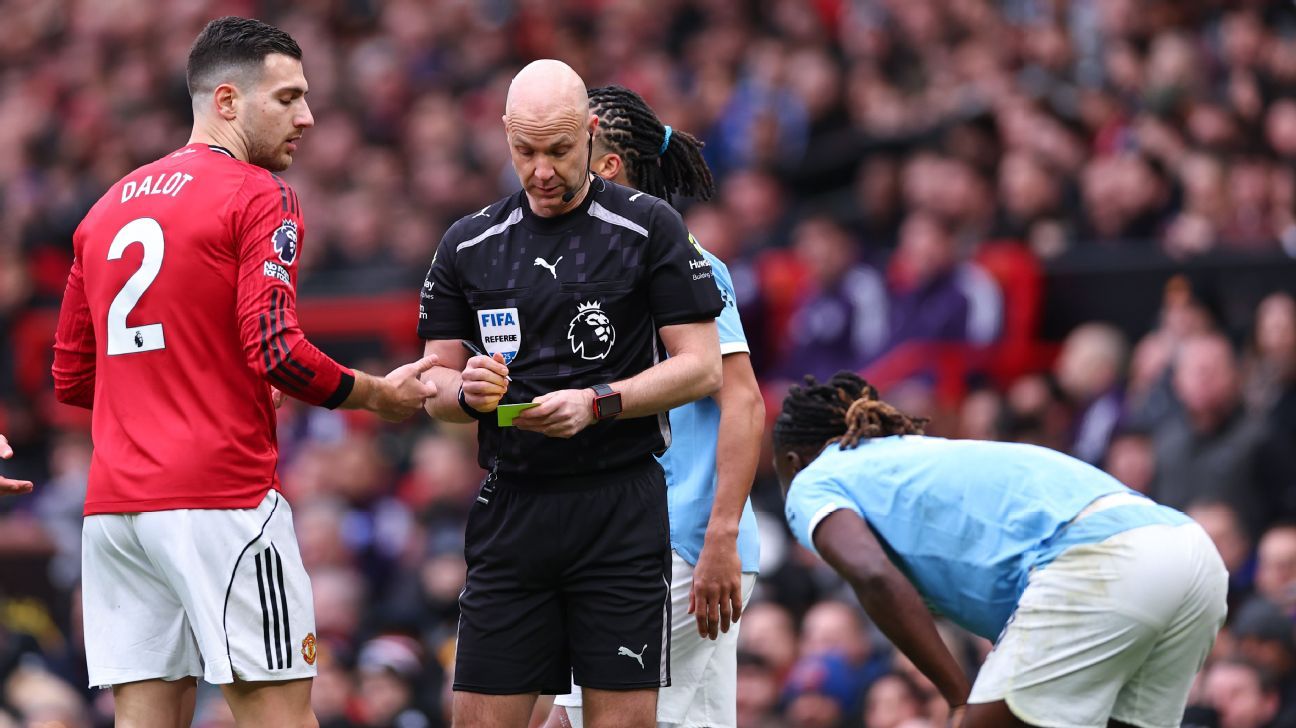
Howard Webb, head of the Professional Game Match Officials, defended VAR's decision not to intervene after Diogo Dalot's challenge on Jeremy Doku that resulted in a yellow card. Dalot was booked in the 11th minute for making contact with Doku's knee, and VAR Craig Pawson backed referee Anthony Taylor's on-field call. Former referees Dermot Gallagher and Mike Dean believed the challenge warranted a red card, but Webb said Dalot made only glancing contact and that the incident looks worse in slow motion. Webb emphasized assessing incidents at full speed and respecting the referee's subjective judgment on the field.
Read at ESPN.com
Unable to calculate read time
Collection
[
|
...
]