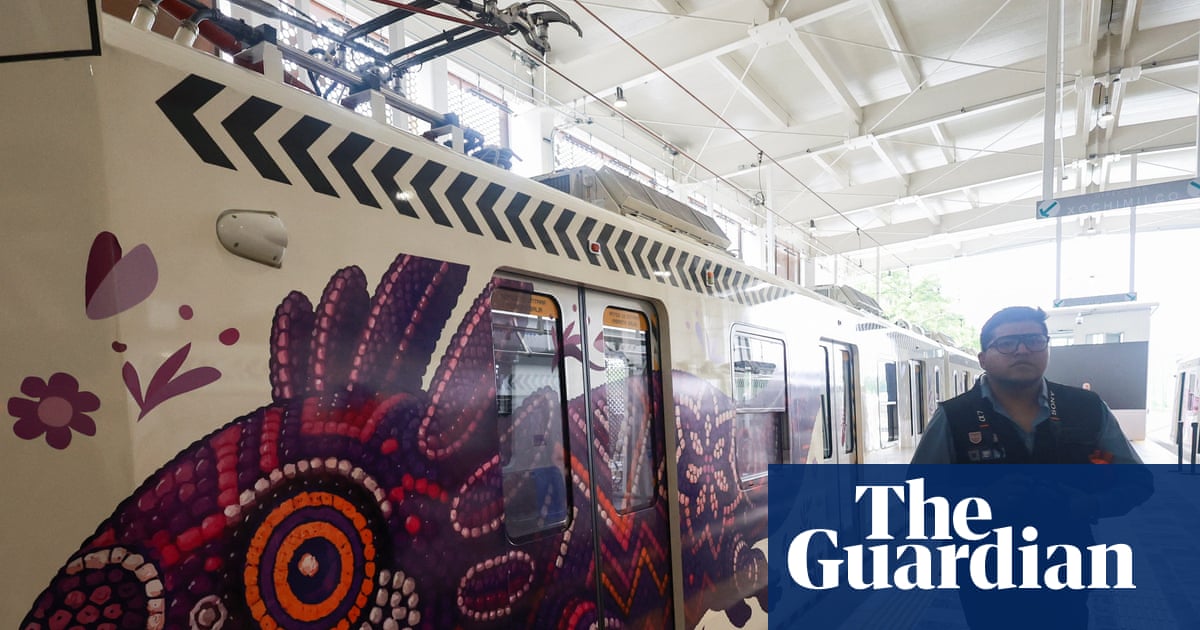
"The axolotl, a kind of salamander native to the ancient waterways of Mexico City, is the capital's mascot for this summer's Fifa World Cup. And these days it is everywhere: painted on walls, plastered on trains, crawling up lamp-posts, swimming across traffic barriers. Following in its trail is an apparent effort to beautify the city before the tournament by painting much of the capital's infrastructure purple: pedestrian overpasses, building facades, walls, bridges, banisters, footpaths all of them turned lilac, lavender or plum."
"But many residents are unhappy with what has been called the axolotlisation of the metropolis, with some complaining that limited state resources could be better utilised elsewhere, particularly in a city filled with potholes, crooked pavements and flooding streets. In emblematic places like the Zocalo or Azteca Stadium it's fine but in other places it's just a waste of resources, said 63-year-old Sergio Rivera, standing in front of a giant pink axolotl in the capital's sprawling central plaza. There are other priorities."
"It's a waste of money, he said. You could use that budget for fixing potholes, traffic lights, security cameras. They're spending on something that doesn't benefit us at all it's just for tourists. The giant purple axolotl peered up at Manuel Martinez from the black bitumen of the street. It was the second such painting of the rare amphibian he had walked past that morning. In recent weeks he had seen axolotl murals pop up in neighbourhoods across Mexico City."
"The mayor of Mexico City, Clara Brugada, who launched the purplifying initiative, has stood firm amid widespread criticism. Some have said, out of prejudice or classism, that we are axolotlising' the city, she told reporters at the reopening of a light rail service (renamed the Axolotl). If axolotlising means filling what was once grey with colour, transformi"
A rare native amphibian, the axolotl, has become Mexico City’s World Cup mascot and appears widely on walls, trains, lamp-posts, and traffic barriers. A purplifying initiative has turned many infrastructure elements lilac, lavender, or plum, including overpasses, facades, bridges, banisters, and footpaths. Some residents oppose the spending, arguing limited state resources should address potholes, traffic lights, security, crooked pavements, and flooding. Criticism is strongest outside emblematic areas such as the Zócalo or Estadio Azteca. Mayor Clara Brugada has defended the effort, rejecting claims of prejudice or classism and framing it as transforming grey spaces with color.
Read at www.theguardian.com
Unable to calculate read time
Collection
[
|
...
]