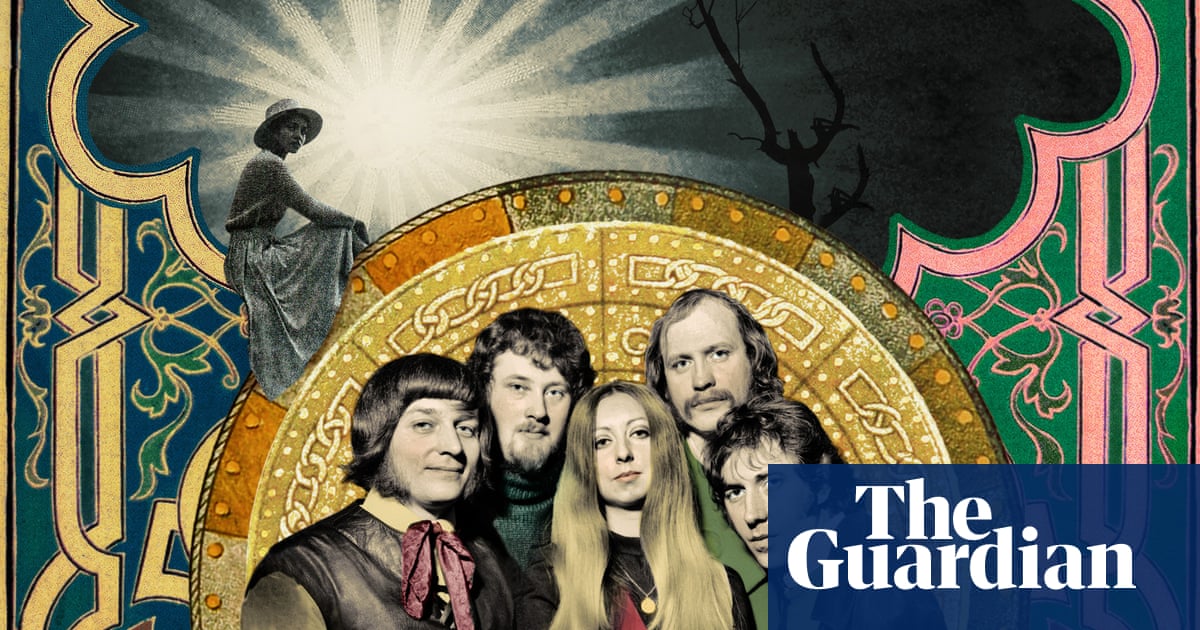
"The old folk songs I heard Pentangle perform that night felt haunting and ancient, yet comforting somehow; they spoke to a unnamed longing within me that felt as old as time. I remember being particularly moved by their version of The Cuckoo, a mournful, 18th-century ballad about the migratory bird whose song signals the coming of the summer."
"Pentangle's rendition of The Cuckoo was a gateway drug of sorts; it was my initiation into the mysteries of British folk culture, and it kickstarted an obsession with standing stones, ancient myths, druids, pagans and seasonal folk customs practised in remote parts of the country—a strange preoccupation that I've not quite been able to shake."
"I was 15 years old; at that fumbling, awkward age on the precipice of adulthood, desperately trying to figure out who I was, who I wanted to be, and where I belonged in the world. I grew up feeling perpetually in-between: half-white, half-black; half-British, half-Caribbean, and on the faultline between what sometimes felt like two worlds at war."
At fifteen, navigating a mixed-race, bicultural identity between British and Caribbean worlds, the author attended a Pentangle concert at London's Royal Festival Hall. The band's fusion of British folk with blues and jazz profoundly moved the author, particularly their rendition of The Cuckoo, an 18th-century ballad. This performance became a pivotal moment, sparking a lifelong fascination with British folk culture, including standing stones, ancient myths, druids, pagans, and seasonal customs. The experience initiated exploration of traditional practices like wassailing, morris dancing, and mummers' plays, revealing folk songs as alternative national histories told from grassroots perspectives.
Read at www.theguardian.com
Unable to calculate read time
Collection
[
|
...
]