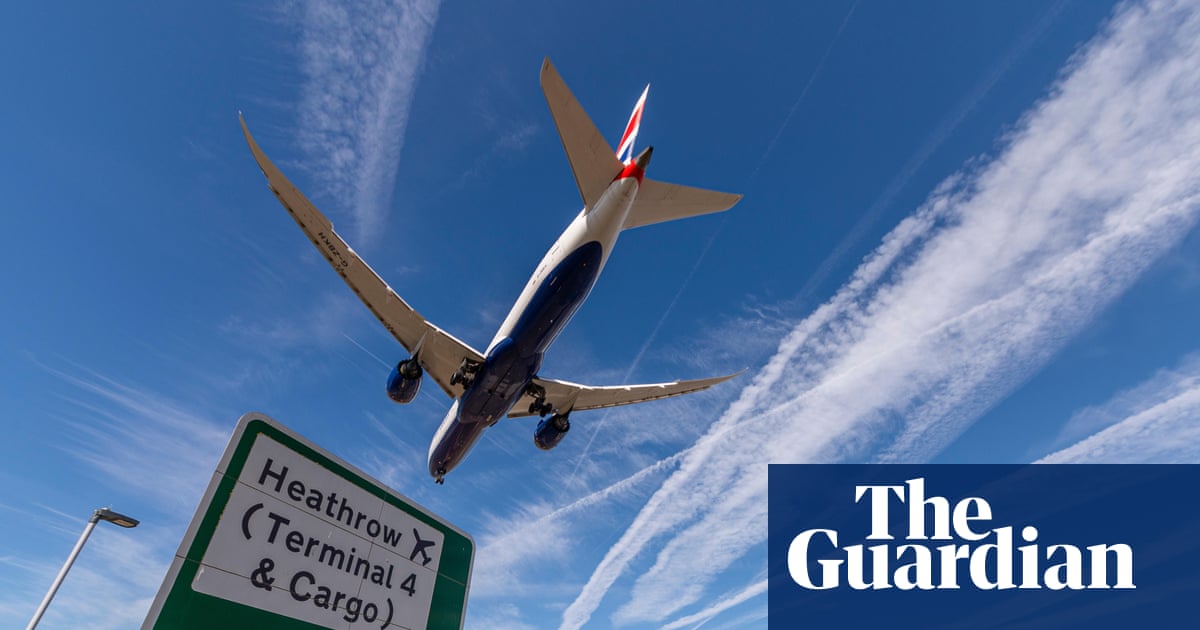
"About 6.7 million people flew through the airport in April, a 5% drop compared with the same period last year. The fall reflected the impact from the Iran conflict and short-term adjustments to travel plans, the airport said. However, the number of transfer passengers transiting for onward flights rose 10% in April year-on-year, as travellers rerouting to Asia and Oceania switched to the Heathrow instead of using rival hubs in the Gulf such as Dubai and Doha."
"The US-Israeli war on Iran has triggered travel disruption around the world, with flight cancellations, delays and longer journey times. Meanwhile, fears are rising that the oil crisis resulting from the blockade of Gulf tanker shipping in the strait of Hormuz could lead to fuel shortages this summer and higher ticket prices. The chief executive of Heathrow, Thomas Woldbye, said travel demand remains strong and current fuel supplies stable."
"He added that while passenger numbers in April were weaker compared with the same month in 2025, so far it had been the busiest month at the airport this year. However, Heathrow said it would review and update its passenger forecast for 2026 next month. The industry faces growing uncertainty over jet fuel supply, with prices averaging $181 a barrel in the week up to 1 May, according to the International Airport Transport Association, roughly double the average price last year."
"Prices have risen due to the effective closure of the strait of Hormuz. More than a fifth of the world's oil normally uses the channel. Last week, the owner of British Airways said it would try to recoup most of a 2bn (1.7bn) hit in fuel costs this year through revenue and cost management actions, with fares likely to rise. Fears over fuel shortages have also been compounded by airlines in the UK successfully lobbying for the ability to cancel more flights without"
About 6.7 million passengers flew through London Heathrow in April, down 5% year-on-year as conflict in the Middle East reduced international travel demand. The decline reflected disruption from the Iran conflict and short-term changes to travel plans. Transfer passengers increased 10% year-on-year, driven by travelers rerouting to Asia and Oceania and choosing Heathrow instead of Gulf hubs such as Dubai and Doha. Global travel disruption included cancellations, delays, and longer journeys. Concerns also grew about an oil crisis from blockade-related disruption in the Strait of Hormuz, which could cause fuel shortages and higher ticket prices. Heathrow said demand remained strong, fuel supplies were stable, and it would update its 2026 passenger forecast next month.
Read at www.theguardian.com
Unable to calculate read time
Collection
[
|
...
]