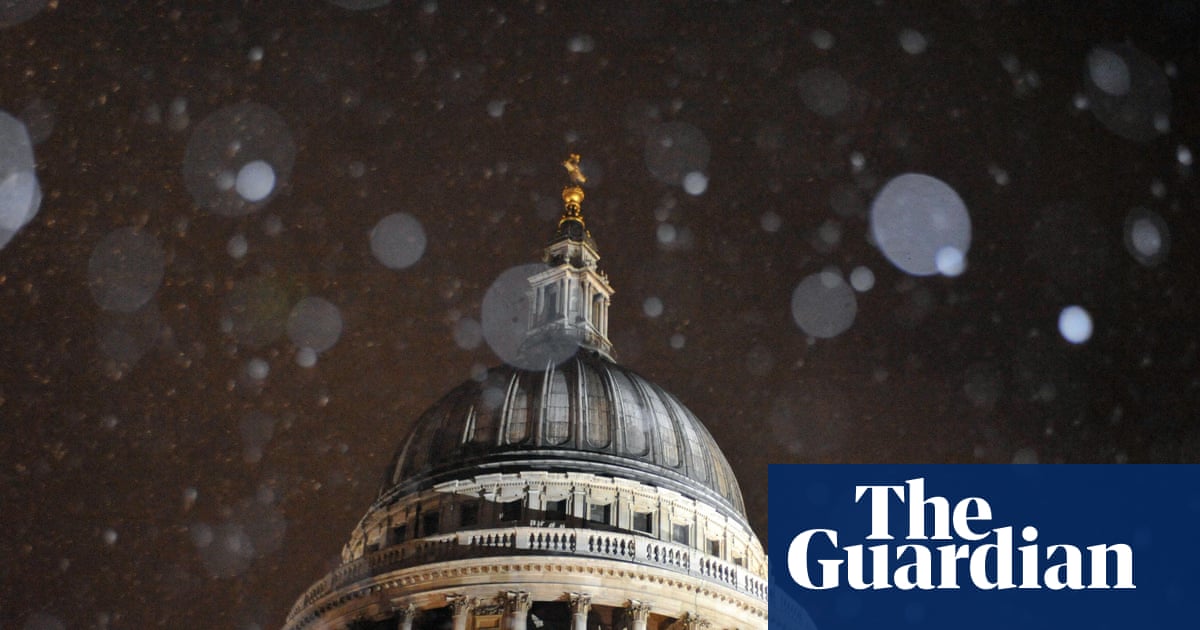
"A vision lay before him: Fleet Street blanketed with snow, silent, empty, pure white, and, at the end of it, the huge and majestic form of Saint Paul's Cathedral. It was a spellbinding moment: the great thoroughfare temporarily devoid of carts and carriages, the cathedral looming blurrily out of the still-falling snowflakes a real-life snow globe."
"What a blessing I feel there is in habits of exalted imagination. The great London silence was another piece in his accumulating pile of evidence that intuiting something beyond yourself is the route to becoming morally magnificent."
"Silence has inspired, daunted, comforted and terrified writers throughout the long course of English literature. One of the earliest English poems, The Wanderer, composed in the language of the Anglo-Saxons, communicates the sheer strangeness of silence via an alien grey seascape in which the protagonist is utterly alone."
On a snowy February morning in 1808, William Wordsworth walked Fleet Street after visiting Samuel Taylor Coleridge. Coleridge's struggles affected Wordsworth's mood. However, he was uplifted by the sight of snow-covered Fleet Street and Saint Paul's Cathedral. This moment inspired Wordsworth to reflect on the power of silence and imagination. He believed that experiencing something beyond oneself leads to moral greatness. Silence has historically influenced writers, evoking feelings of loneliness and introspection, as seen in the early poem The Wanderer, which captures the essence of isolation.
Read at www.theguardian.com
Unable to calculate read time
Collection
[
|
...
]