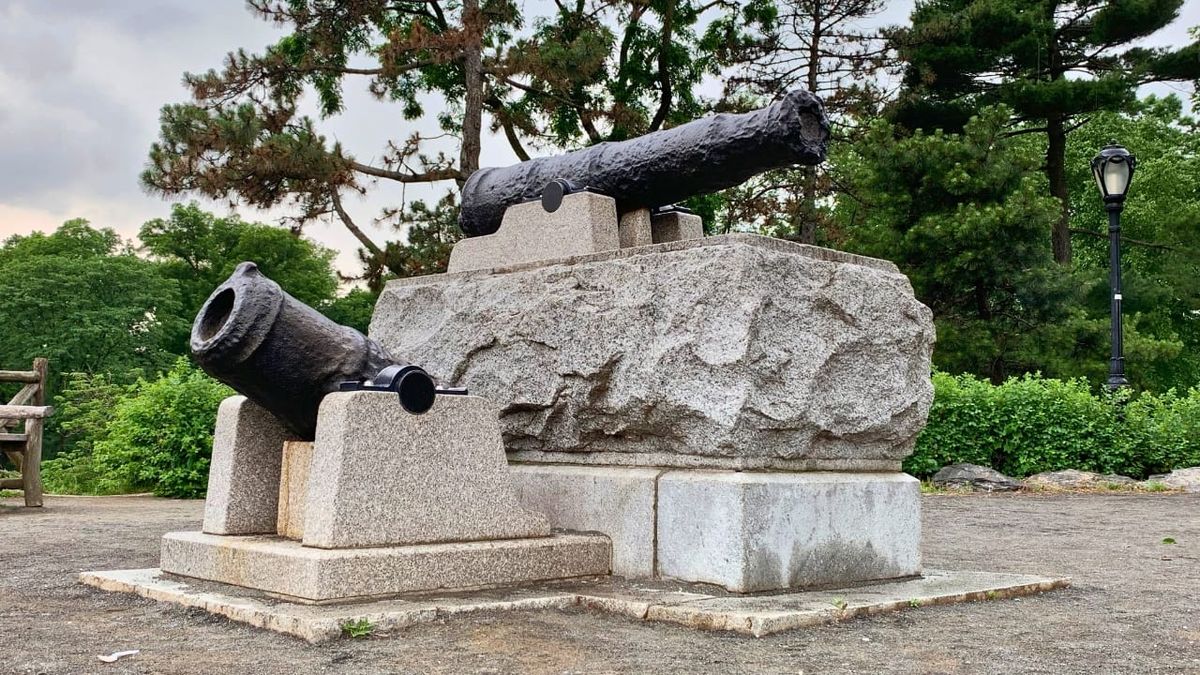
On September 15, 1776, British forces invaded Manhattan at Kip’s Bay and pushed the American army into a chaotic retreat northward. Colonel William Smallwood’s Maryland troops halted the British advance in rocky passes and high ground in what is now Central Park, buying time to prevent Washington’s army from being cut off and destroyed. The route covers a forgotten Revolutionary battlefield, an Oldest Building in Central Park featuring a War of 1812 blockhouse on a forested hilltop, and remnants of a lost colonial tavern on the former main road to New England. It also highlights reused fortifications built twice by different armies and a bench memorializing Andrew Haswell Green, who shaped Central Park and helped invent New York City as known today.
"On September 15, 1776, British forces invaded Manhattan at Kip's Bay and sent the American army into a chaotic retreat northward. Few know what happened next. The action continued northward. Colonel William Smallwood's elite Maryland troops finally halted the British advance in the rocky passes and high ground of what is now Central Park-buying just enough time to prevent the British from cutting off and destroying what remained of Washington's army."
"Visit the site of a little known skirmish that took place on one of the darkest days of the American Revolution. Uncover a War of 1812 blockhouse hidden on a densely forested hilltop that most park visitors don't know exists. Track down remnants of landmark on what used to be the main road to New England, later the site of a Victorian convent."
"Learn about military forts built twice over by two different armies in two different wars. Sit on a bench that memorializes Andrew Haswell Green, the largely forgotten genius who not only shaped Central Park but literally invented the idea of New York City as we know it today."
Read at Untapped New York
Unable to calculate read time
Collection
[
|
...
]