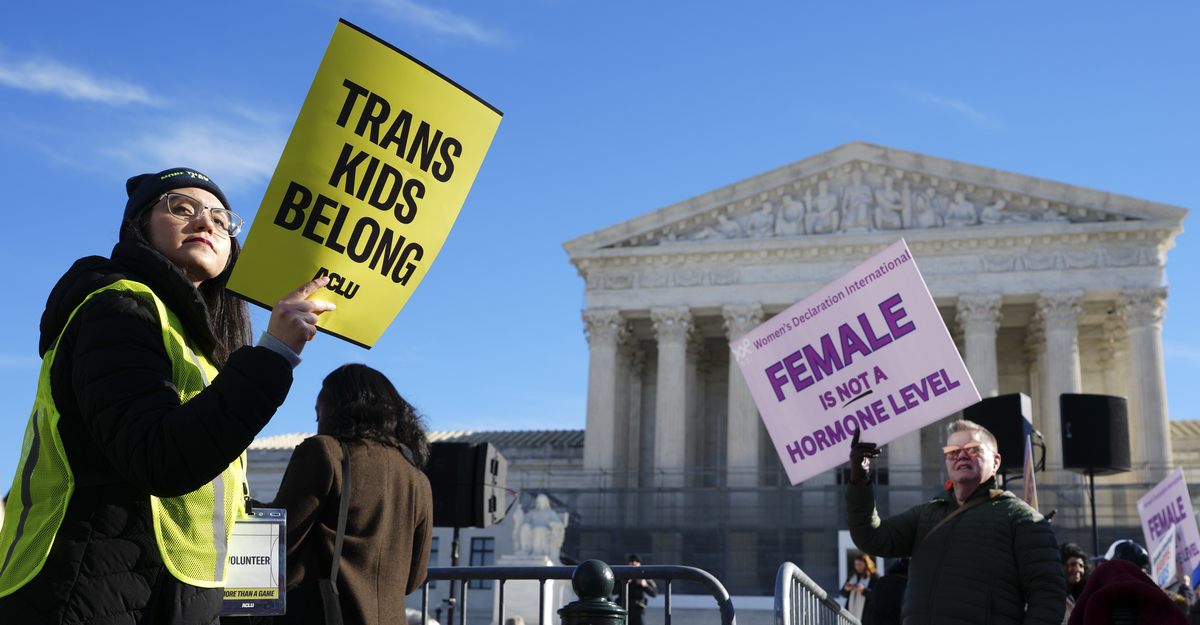
Transgender participation in women's athletics creates a difficult, often zero-sum conflict between trans women and cisgender women, both asserting equal protection from discrimination. The core scientific question is whether trans women athletes retain a lingering testosterone-related advantage; that question remains disputed and unresolved, preventing clear resolution. In the Supreme Court cases Little v. Hecox and West Virginia v. B.P.J., lawyers for trans athletes challenged state bans but failed to persuasively answer whether trans competitors disadvantage cisgender women. Title IX forbids sex discrimination in education and underpins decades of efforts to secure athletic opportunities for girls and women. The NCAA reports fewer than ten trans student athletes among 500,000 collegiate competitors in 2024.
"Two groups-trans women and cisgender women-both argue that they need equal protection from discrimination. But if they can't have it at the same time in the often zero-sum realm of sports, who wins? As Justice Brett Kavanaugh put it during this week's oral arguments in the first cases on the topic to come before the Supreme Court, "There are harms on both sides.""
"Lawyers representing trans athletes in the two cases before the court- Little v. Hecox and West Virginia v. B.P.J., which challenge state laws that categorically ban trans women from women's sports teams-made many torturous arguments. But they did not put forward winning ones. That's a judgment not of their position, but of their performance. They failed to effectively answer this question: Does a trans woman who competes on a women's team disadvantage other women?"
Read at The Atlantic
Unable to calculate read time
Collection
[
|
...
]