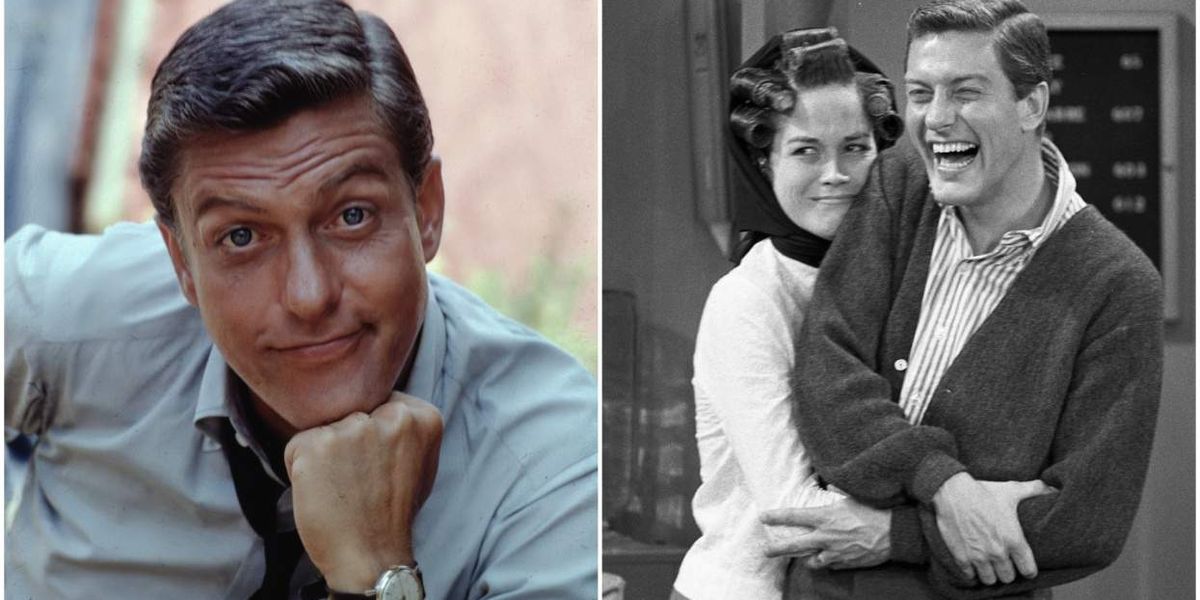
"Growing up in suburban Pittsburgh, I had a small black-and-white TV on an aluminum TV tray, which sat at the end of my bed in a tiny room I shared with my brother. Every afternoon after grade school, I'd turn the dial and wait for the familiar music of The Dick Van Dyke Show, then in reruns. As a kid who was mature for his years, I loved that program."
"The reason stuck out was that his character, Caractacus Potts, fascinated me. Eccentric, whimsical, a singing, dancing widower who built impossible machines and floated through life with a kind of buoyant joy. It seemed like a joy or an attribute that I was forced to repress, yet Van Dyke expressed it supercalifragilisticexpialidociously, that word forever fabulous. And in that confused pre-teenage way you have when you're quietly wondering who you are, I remember thinking,"
Dick Van Dyke's centennial provokes deep, reflective responses, particularly among gay men who found recognition and solace in his expressive performances. Childhood memories include a small black-and-white TV on an aluminum tray and afternoons spent watching The Dick Van Dyke Show in reruns. Van Dyke's handsomeness, humor, limber physicality, and effortless fluidity created mesmerized admiration. Chitty Chitty Bang Bang and its title song became a lifelong earworm. The character Caractacus Potts embodied eccentric, whimsical, singing-dancing joy, modeling buoyant creativity and emotional openness that many felt forced to repress. Those performances provided a model for self-understanding and emotional validation during times of social uncertainty.
Read at Advocate.com
Unable to calculate read time
Collection
[
|
...
]