Repairing electronics and household appliances has become difficult in the United States for decades, especially when devices include proprietary software. Costs and incentives often push consumers to replace products rather than repair them, such as when printer ink prices rival the cost of a new printer. Government and private-sector examples show similar barriers, including inability to repair purchased weapons systems due to manufacturer intellectual property rights and restrictions on farmers accessing software needed to repair equipment. These constraints contribute to environmental harm, with the United States producing large amounts of electronic waste and only a small portion being recycled. A right-to-repair movement seeks to remove unnecessary financial, legal, and technical barriers so users can repair devices themselves or through third parties. Legislative efforts include federal bills introduced by both parties, which face strong opposition from industry groups.
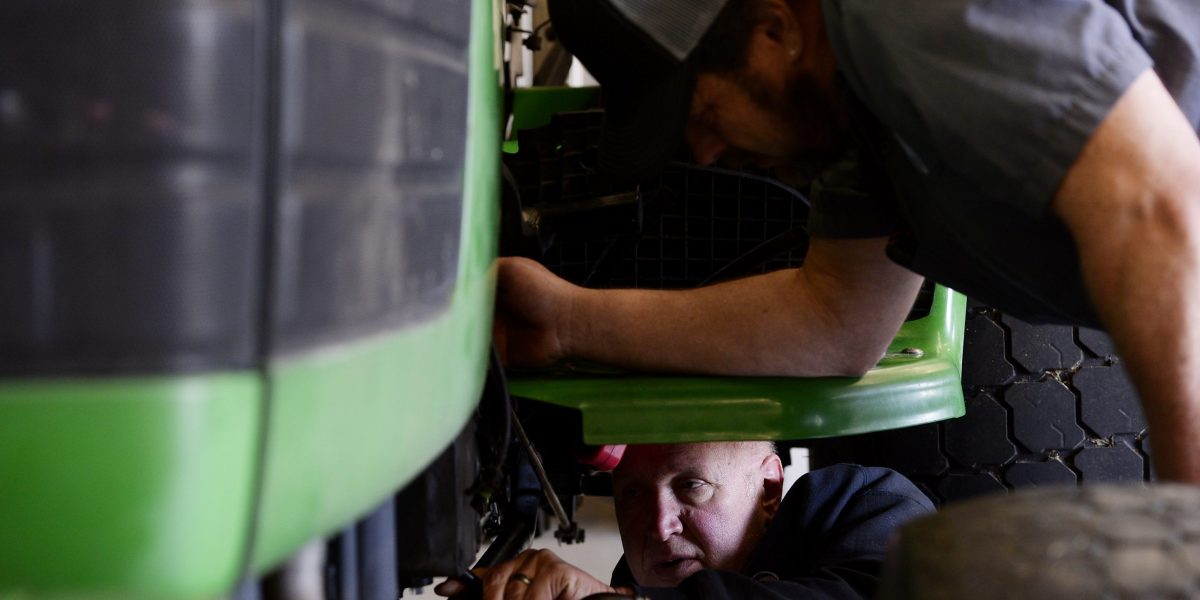
"Repairing electronics and household appliances has not been a real option in the United States for decades now, particularly for items that have proprietary software in them. Absurd situations have proliferated. It can cost about the same to buy a new printer as it does to replace the ink cartridge. The U.S. Department of Defense cannot repair the weapons systems it purchases because the intellectual property rights remain with the manufacturer. John Deere, the farming equipment company, doesn't allow farmers to access the software needed to repair their own combines and tractors because, while the purchase covers the physical machinery, it does not cover the software."
"One consequence, in addition to cost and frustration for consumers, is environmental harm. The U.S. is the world's second producer of electronic waste after China, to the tune of about 43 lbs (19.5 kg) of electronic waste annually per person. Only 25% of this e-waste is recycled."
"The right-to-repair movement emerged in response, calling for people to be able to repair what they purchase, or have third parties do the repair work, without unnecessary financial, legal or technical barriers. Right to repair seems to be a rare area of bipartisanship in Congress. The Warrior Right to Repair Act - introduced in 2025 by a Democrat - and the Repair Act - introduced by a Republican - are two ongoing legislative initiatives to create a federal legal framework that would make it easy and cheap for American users to repair their devices. Both bills are fiercely opposed by industry groups."
"As a scholar of American culture, I found through my research that the origins of the legal and technical obstacles to product repairs lie in debates in the 1980s over new media and copyright guardrails."
Read at Fortune
Unable to calculate read time
Collection
[
|
...
]