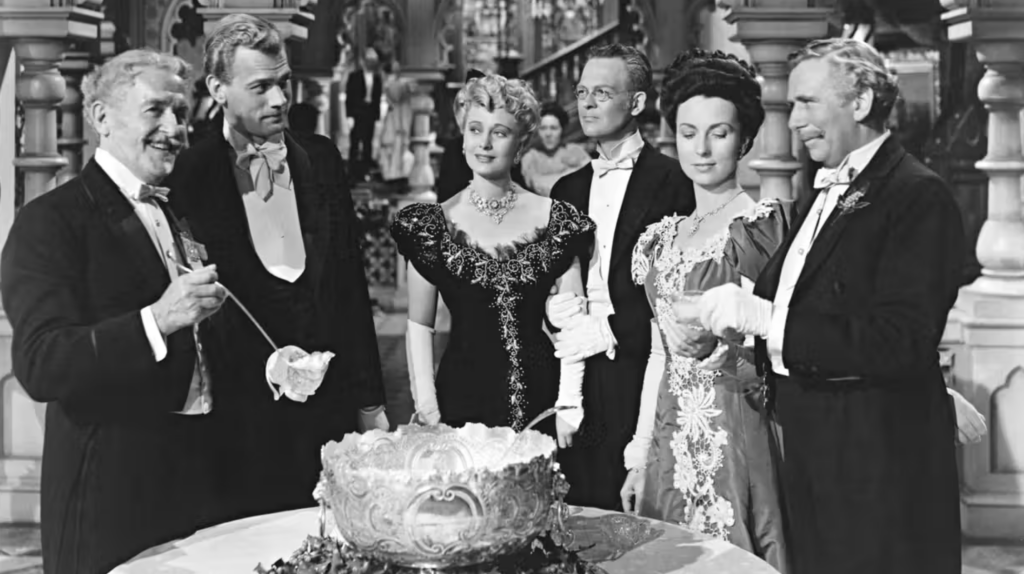
Ted Turner commissioned broadcast colorized versions of more than 100 classic films in the mid-1980s, but a contract clause tied to Orson Welles’ Citizen Kane prevented the full Turner treatment. That limitation is now being compared with Fable Studio’s current effort to use artificial intelligence to restore Welles’ The Magnificent Ambersons, a film that was heavily cut by the studio before its 1942 release. Welles’ recut occurred while he was absent, after he was sent to Brazil to shoot a documentary about Carnival for Pan-American unity. A disastrous test screening led Hollywood to consider the material too “down-beat,” and the film’s focus on the decline of the titular family shaped how it was ultimately handled.
"In the mid-nine­teen-eight­ies, he com­mis­sioned for broad­cast col­orized ver­sions of more than 100 clas­sic movies, from The Trea­sure of the Sier­ra Madre to It's a Won­der­ful Life to Casablan­ca. It was only thanks to a clause spec­i­fy­ing a black-and-white pic­ture in Orson Welles' con­tract with RKO that Cit­i­zen Kane nev­er got the full Turn­er treat­ment."
"That bless­ly failed project is now being invoked again in com­par­i­son with the start­up Fable Stu­dio's enter­prise, under­way even now, of using arti­fi­cial intel­li­gence to restore Welles' sopho­more fea­tur­e The Mag­nif­i­cent Amber­sons, which was noto­ri­ous­ly muti­lat­ed by the stu­dio before its release in 1942."
"After the attack on Pearl Har­bor, he received what sounds like some­thing more than a request from Nel­son Rock­e­feller, then the government's Coor­di­na­tor of Inter-Amer­i­can Affairs, to go to Brazil and shoot a doc­u­men­tary about Car­ni­val in the inter­est of "Pan-Amer­i­can uni­ty." Due to a dis­as­trous test screen­ing, as Welles explains in the clip from a 1982 Are­na broad­cast above, "it was thought by every­one in Hol­ly­wood, while I was in South Amer­i­ca, that it was too 'down­beat,' a famous Hol­ly­wood word at the time.""
Read at Open Culture
Unable to calculate read time
Collection
[
|
...
]