"It was long ago that poly­the­ism, as the sto­ry comes down to us, gave way to monothe­ism. Human­i­ty used to have many gods, and now almost every reli­gious believ­er acknowl­edges just one - though which god, exact­ly, does vary. Some pop­u­lar the­o­ries of "big his­to­ry" hold that, as the scale of a soci­ety grows larg­er, the num­ber of deities pro­posed by its faiths gets small­er."
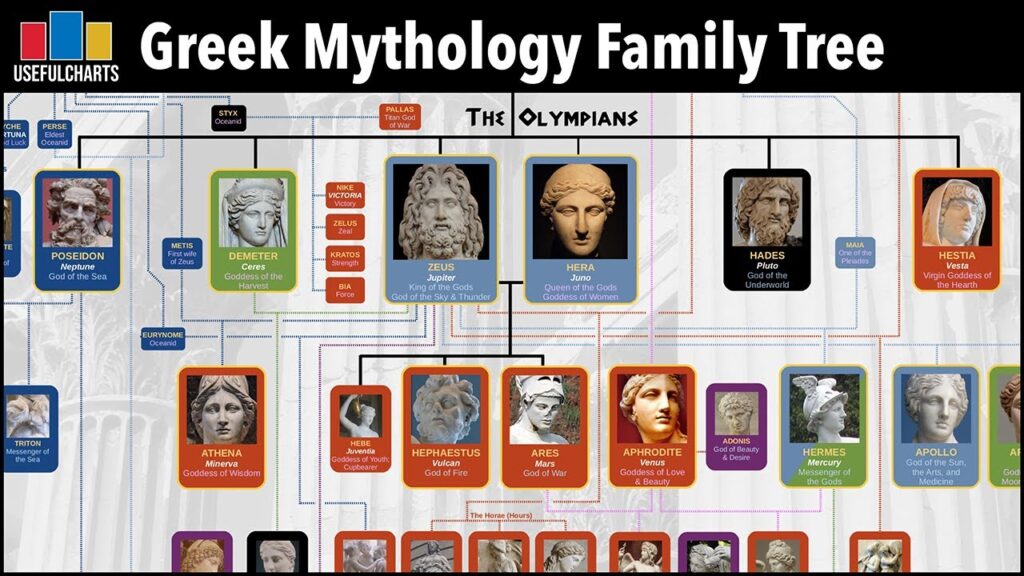
"Or maybe it would have to be a soap opera, giv­en that most of them belong to one big, often trou­bled clan. Hence the struc­ture of Use­fulCharts' Greek Mythol­o­gy Fam­i­ly Tree, explained in the video above. Also avail­able for pur­chase in poster form, it clear­ly dia­grams the rela­tion­ships between every­one in the Greek pan­theon, from the high­est "pri­mor­dial gods" like Eros Elder and Gaia down to the chil­dren of Zeus and Posei­don."
Humanity shifted from polytheism to monotheism as societies centralized and grew, reducing the number of proposed deities. Larger political entities often favored fewer gods, explaining Rome's eventual adoption of Christianity and the earlier profusion of gods in Greek city-states. Greek deities formed extensive familial networks extending from primordial figures like Eros Elder and Gaia to the children of major gods. A detailed family-tree diagram maps these relationships and highlights how Greek gods behaved unpredictably, vengefully, and sometimes nonsensically rather than as infallible, omniscient beings, reflecting the uncertainties of ancient life.
Read at Open Culture
Unable to calculate read time
Collection
[
|
...
]