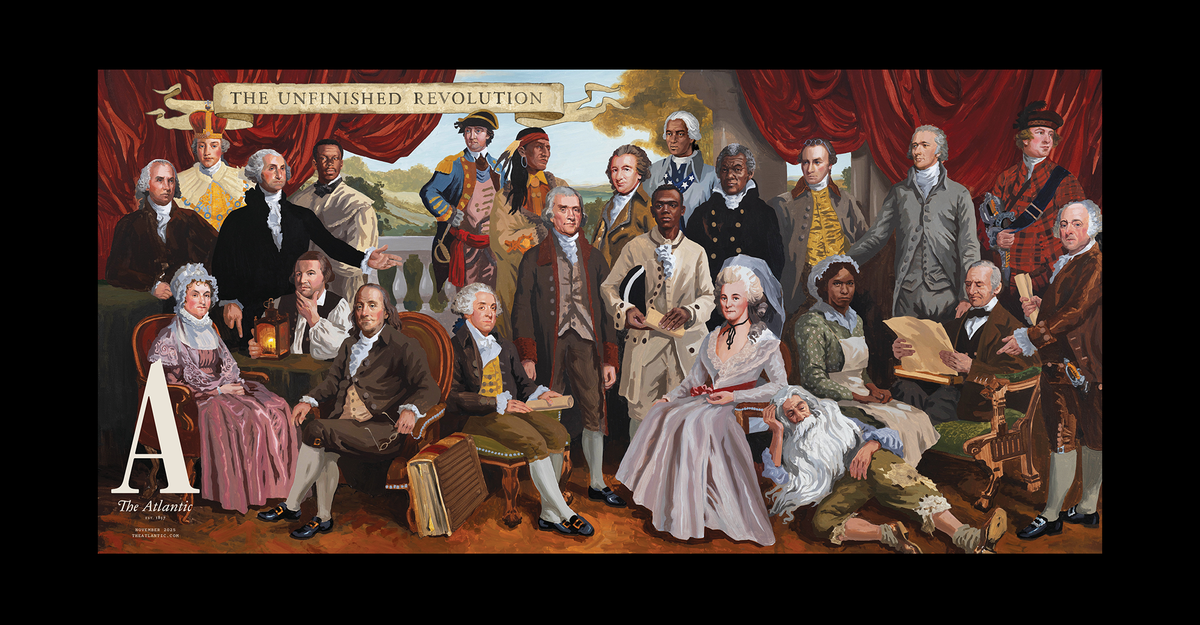
Images place women, African Americans, and Native Americans alongside Washington and Jefferson, offering representation that inspires young learners. Middle-school students benefit from seeing historically marginalized figures depicted as equals to founding fathers. George III showed methodical, conscientious behavior rather than madness, driven by duty and inflexibility. Colonists framed their rebellion as a quarrel with a man instead of a system to win public sympathy, targeting the King to turn constitutional disputes into a moral crusade. The Revolution produced radical political changes while leaving many social hierarchies intact, preserving established inequalities despite constitutional transformation.
"Although we stress the importance of history's "forgotten" heroes-in this case, the women, African Americans, and Native Americans without whom the efforts of the great men of the era would surely have failed-there are few, if any, images depicting them as equal to Washington or Jefferson. How inspiring for our young learners to see, in looking at Joe McKendry's exquisite tableau, faces that reflect their own."
"George III was not mad; he was methodical, conscientious, and tragically certain that duty and inflexibility were synonymous. The American colonists' decision to frame their rebellion as a quarrel with a man rather than a system was brilliant from a public-relations standpoint, if not exactly honest. By aiming their indictment at the King, the Founders converted constitutional disputes into a moral crusade."
Read at The Atlantic
Unable to calculate read time
Collection
[
|
...
]