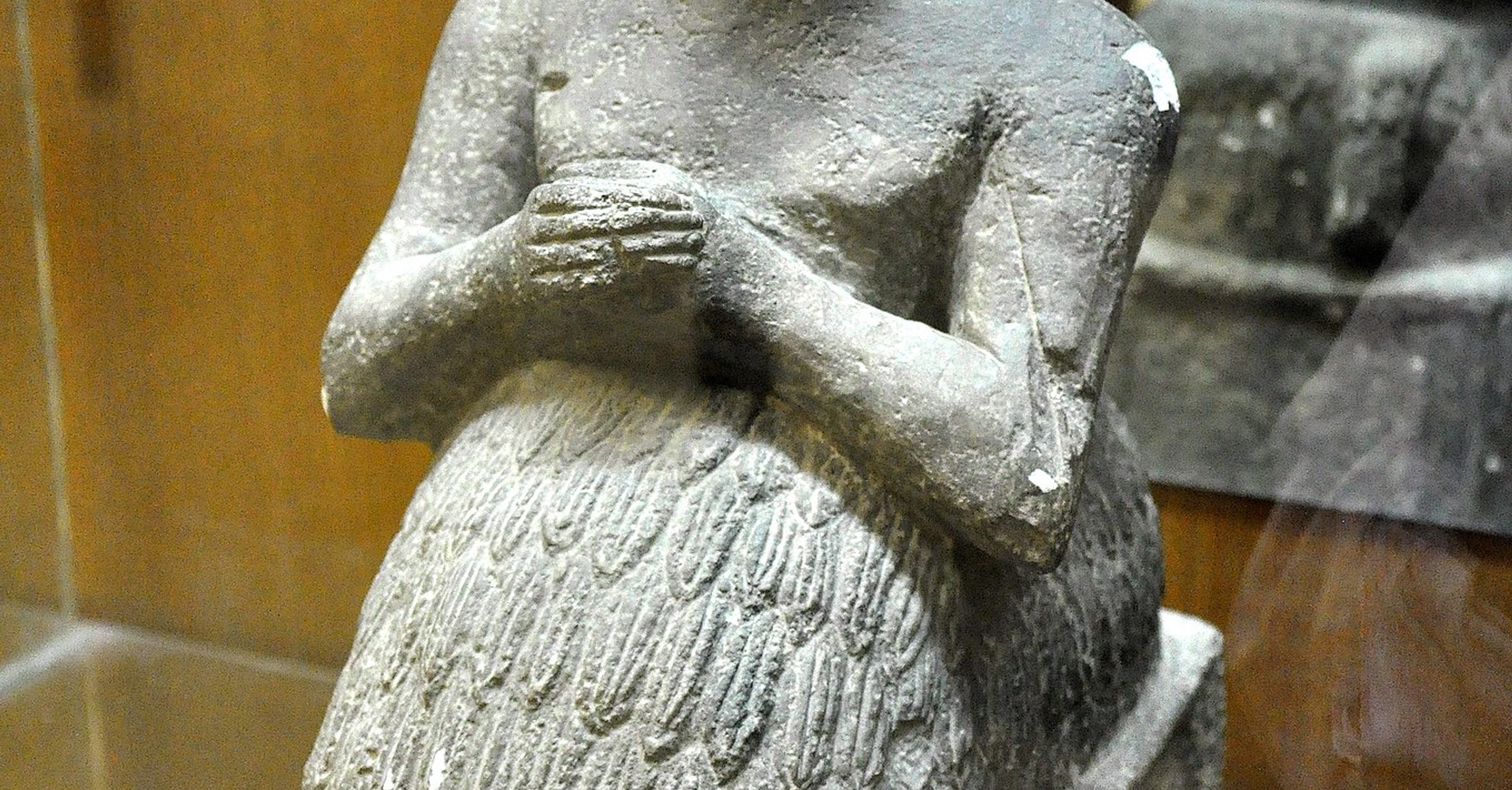
"Scribes in ancient Mesopotamia were highly educated individuals trained in writing and reading on diverse subjects. Initially, their purpose was to record financial transactions through trade, but in time, they were integral to every aspect of daily life, from the palace and temple to the modest village or farm. Eventually, they created what is now known as history. Writing was invented in Sumer, Mesopotamia, circa 3600/3500 BCE, in the form of cuneiform script and refined circa 3200 BCE in the Sumerian city of Uruk."
"To become a scribe, one had to learn to fashion one's own writing tablet, master the 600 characters of cuneiform, and also become educated in various fields of knowledge, including agriculture, botany, business and finance, construction, mathematics, politics, religion, and many others. Scribes were almost always the sons of the upper class and nobility, but by the Akkadian period (circa 2350/2334 to 2154 BCE), there is evidence of female scribes,"
Ancient Mesopotamian scribes received extensive training in cuneiform and multiple disciplines to manage records and public affairs. Writing originated in Sumer around 3600/3500 BCE and was refined in Uruk circa 3200 BCE to serve expanding long-distance trade. Scribes learned to fashion tablets, master some 600 signs, and study agriculture, botany, business, mathematics, construction, religion, and politics. Scribes typically came from elite families, though female scribes appear by the Akkadian period, exemplified by Enheduanna. Knowledge of Sumerian remained essential even as Akkadian and other languages used cuneiform. Scribes preserved earlier documents and thereby created a continuous written record of history.
Read at World History Encyclopedia
Unable to calculate read time
Collection
[
|
...
]