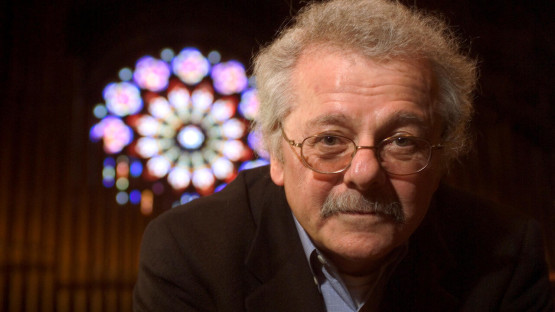
"Salvatore taught at the ILR School and in the American Studies Program in the College of Arts and Sciences for 36 years, retiring in 2017 as the Maurice and Hinda Neufeld Founders Emeritus Professor of Industrial and Labor Relations. The author of three books, including " Eugene V. Debs: Citizen and Socialist " (1982), which received both the Bancroft Prize and the John H. Dunning Prize."
"Two other books followed, " We All Got History: The Memory Books of Amos Webber " (1996), which received the New England History Association's Outstanding Book Prize, and " Singing in a Strange Land: C. L. Franklin, the Black Church, and the Transformation of America " (2005), which examines the life of one of the most influential preachers of his generation."
"the glue that holds all three of these subjects together is the alternative perspective they share on the meaning of being an American ... These are issues and people I find intriguing - people who revere the part of the Declaration of Independence that reads, 'We hold these truths to be self-evident that all men are created equal, and endowed by their creator with unalienable rights,' and who question the way those values are applied in modern society."
Nick Salvatore taught at Cornell's ILR School and in the American Studies Program for 36 years, retiring in 2017 as Maurice and Hinda Neufeld Founders Emeritus Professor of Industrial and Labor Relations. He authored three award-winning books on labor and African American religious history, including a Bancroft Prize–winning biography of Eugene V. Debs and works on Amos Webber and C.L. Franklin. Salvatore championed justice for working people, mentored undergraduates, and loved music and Italian cooking. He described an alternative perspective on American identity rooted in the Declaration's equality principles and questioned their application in modern society.
Read at Cornell Chronicle
Unable to calculate read time
Collection
[
|
...
]